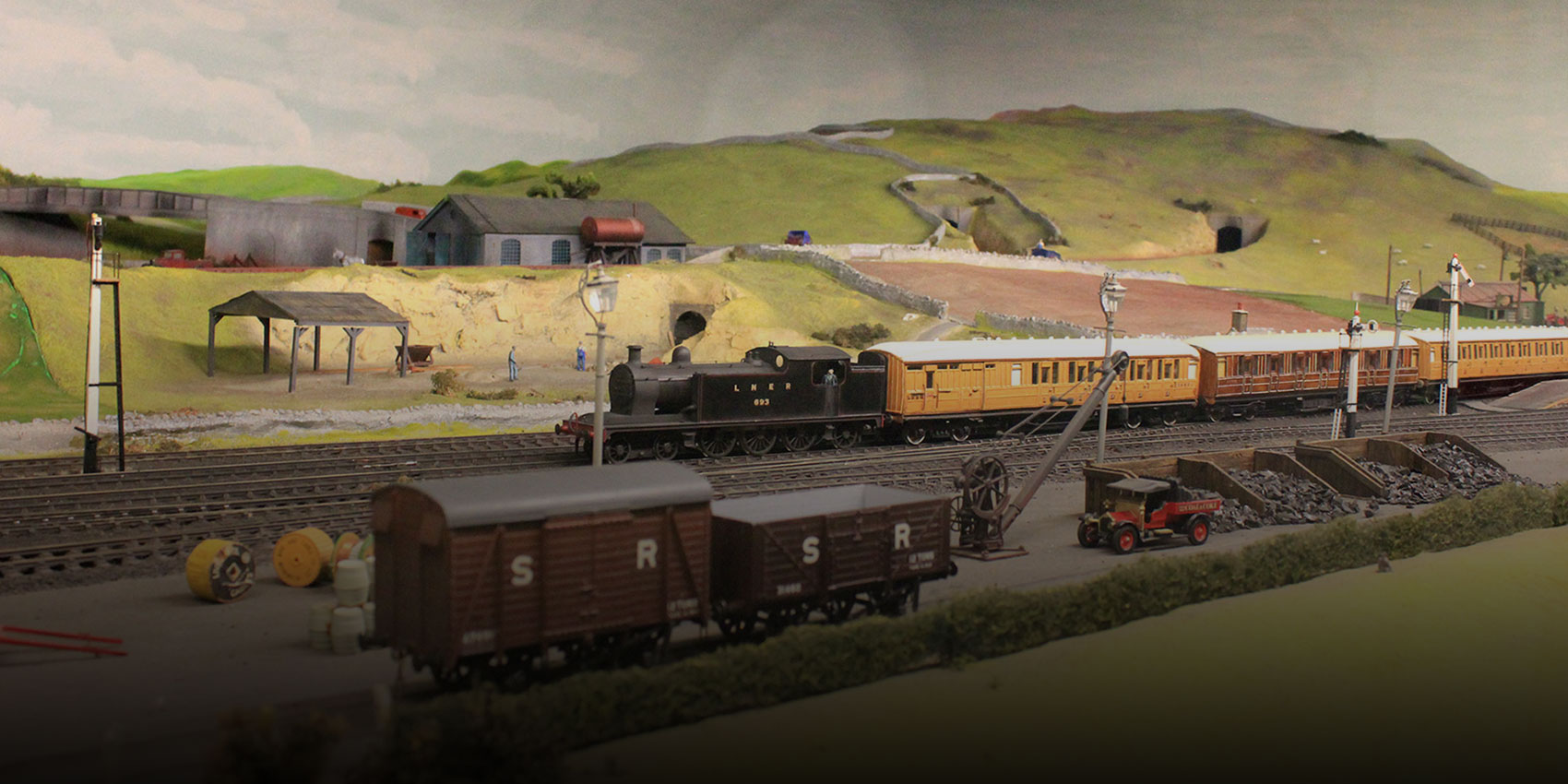
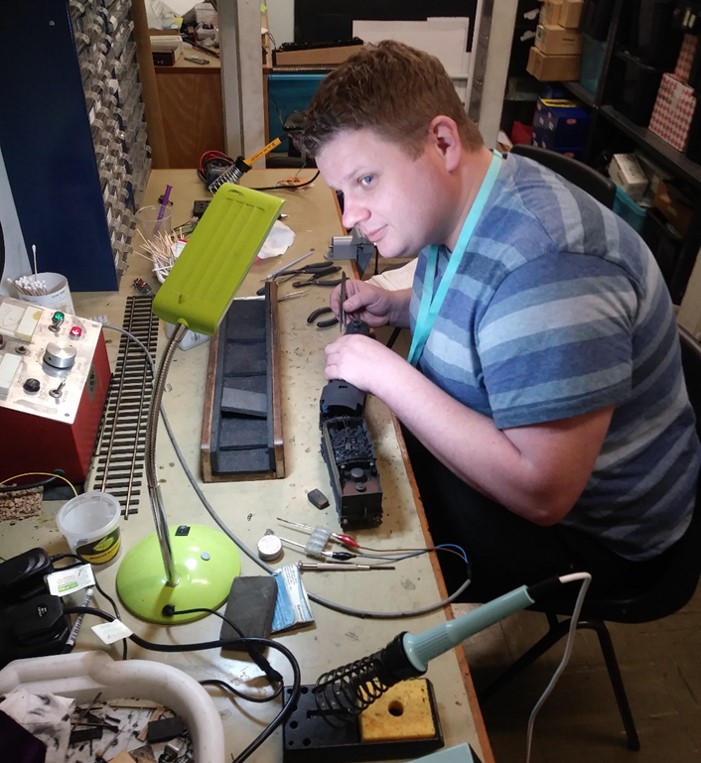
Today we’re joined by Model Railway Volunteer James Wells.
James volunteers on our model railway which he combines with full-time work. In many of our roles we are able to offer flexible volunteer hours to suit our volunteers’ timetables and this helps younger volunteers like James combine working life and volunteering. James is one of a small team of volunteers who operate our model railway, ensuring it runs smoothly for our visitors. He is also an expert modeller and brings these skills his volunteering too, helping maintain and develop our model railway layout and locomotives.
James loves being part of things at the museum. Here’s why…
What is your volunteer role?
Model Railway Technician/Model Maker.
How long have you volunteered at the museum?
Just over two years.
And how long do you see yourself continuing to volunteer at the museum?
I would like to remain as a volunteer for as long as there is a high-quality model railway helping to tell the story of railways. I plan to continue for a long time to come!
Describe your typical day volunteering
The general duties during the day centre around cleaning the track and wheels—a horrible ‘gunge’ builds on these surfaces as a result of current flowing across (this being how the locos and trains collect power). As well as this, general maintenance is undertaken on locomotives, rolling stock and (when the museum is closed to visitors) the layout itself.
For the most part, there is a limited amount of interaction with visitors, but when mishaps occur you are very much on display—though fortunately these are few in number! But when you are outside there are plenty of opportunities to talk to visitors and answer questions and explain things about the layout.
Much of the work is very much ‘lone working’ but there is a lot of contact with my supervisor during the day as well as, periodically, other staff such as those involved with day-to-day operations, security, etc. From time to time I have spoken to and worked with those from the exhibition teams, the web team and the volunteer coordinators.
See also a blog post I helped produce about the day-to-day tasks associated with the model.
Additionally I undertake more involved maintenance, overhauls and building of new items off-site which means time within the museum is focused on the more pressing and essential duties.
Why do you volunteer at the Museum?
I have been visiting the museum since I was a toddler and I wanted to, regardless of how clichéd it sounds, ‘give something back’ using the skills that I have.
Over the years I have got so much from the museum, leading me to pursue a career in the rail industry—hopefully in a small way I can help inspire others to develop and follow their interest.
What is the best thing about volunteering?
Simply being part of the museum!
To feel like you’re a part of a well-loved, national institution feels absolutely amazing! I have been made to feel welcome and like I belong as part of things and it’s such a special feeling which makes volunteering a real joy. It’s not without its challenges and frustrations but that is all part of such a rich experience.
What difference do you think you make to the museum in your role?
I like to think that I have made a positive impact with the model railway, helping improve reliability overall as well as improving reliability and availability of locomotives and rolling stock—all of which adds to the visitor experience.
Alongside this is beginning to address the cosmetic issues of the model railway to help improve and update various aspects. This will, in time, also improve the visitor experience.
What do you get out of volunteering?
I have a real sense of satisfaction from volunteering as well as a sense of belonging which is a lovely thing to feel. Being a part of something I have grown up with and which has hugely influenced me is simply wonderful.
I hope the model railway is treated better than the P4 layout ‘Heckmondwike’ was. It had to be scrapped after the loan ended due to poor custodianship.
Heya.
This is my own story in order to tell on here. We have our own railway museum at home. Every year we make a small railway train using a lot of plastic Lego bricks. I buy them at a local supermarket in question once a month. I recently took both children to a railway exhibition so that we could learn. There are no good railway museums near us so I improvise.
It is fun. We build trains out of Lego instead of travelling miles to visit a railway museum. Or I see if we can go to a train station to talk with the staff about safety and how things work in real life. We look at railway videos on YouTube too. Those are fun. Recently we did a game and a role play based on historical real life events in Asia many years before. As a part of the unit we researched railways in other parts of the world. We also did a safety poster and an article.
We met with a railway society. We were treated to a live question and answer session based on themes. We also prepared a text and a fact sheet about the third rail. The article covered types of trains and signalling systems of the past in addition. The game revolved around types of railways. I even did a railway bookmark. I created a series of booklets to advertise trains. We decided to read build a small working train to test our ability to move it. I drew some trains in colour.
That is important. I also taught a few lessons about what to do if a passenger train is moving towards you and what not to do. We attended a talk about the purpose of a danger signal. Other lessons involved a role play on numbers of passengers and a fun activity to test math skills. More activities included making a railway out of Meccano and researching numbers of high speed trains. We saw a railway toy.