A small handwritten booklet, nearly lost in a house clearance, revealed the life of Ethel Danby and her family, shaped by the railways of Yorkshire in the age of steam. Guest author Jonathan Winter traces the story hidden within its pages.
A chance discovery
I picked up a box of my grandmother’s things, intent on vigorous house-clearing. Which things to keep, and which to send to the tip? We tried to be ruthless.
My grandparents, who were both doctors, had travelled widely before settling in Beverley. Among family photographs and miscellaneous objects gathered over many years, I laid my hand on a tiny booklet with a festive cover stuck onto it. It looked inconsequential—a Christmas souvenir, perhaps. Keep or tip? This should be an easy decision, I thought.
Opening the booklet, I found it filled to the edges with dense handwriting. The opening words caught my eye:
“Written in bed mostly to pass time away and thoughts of memorys of the past.”
Above the first page were the words:
“Happy memories of part of my life. E.D.”
Who was E.D?
Those were not my grandparents’ initials (their surname was Nye), nor anyone familiar. Who was this E.D.? Why had she written this? And how had it found its way into our family? Like an impatient novel-reader I flicked through the pages and started deciphering the handwriting, looking for clues.
The story began simply enough:
“I was born at Swinton in the W.R. of Yorkshire.”
Then, only a few lines later:
“After a few years at Swinton my father was stationed at Masbro Station…”
With that, the outline of a life began to emerge: the life of Ethel Emma Danby, daughter of a railwayman, and later the wife of one.
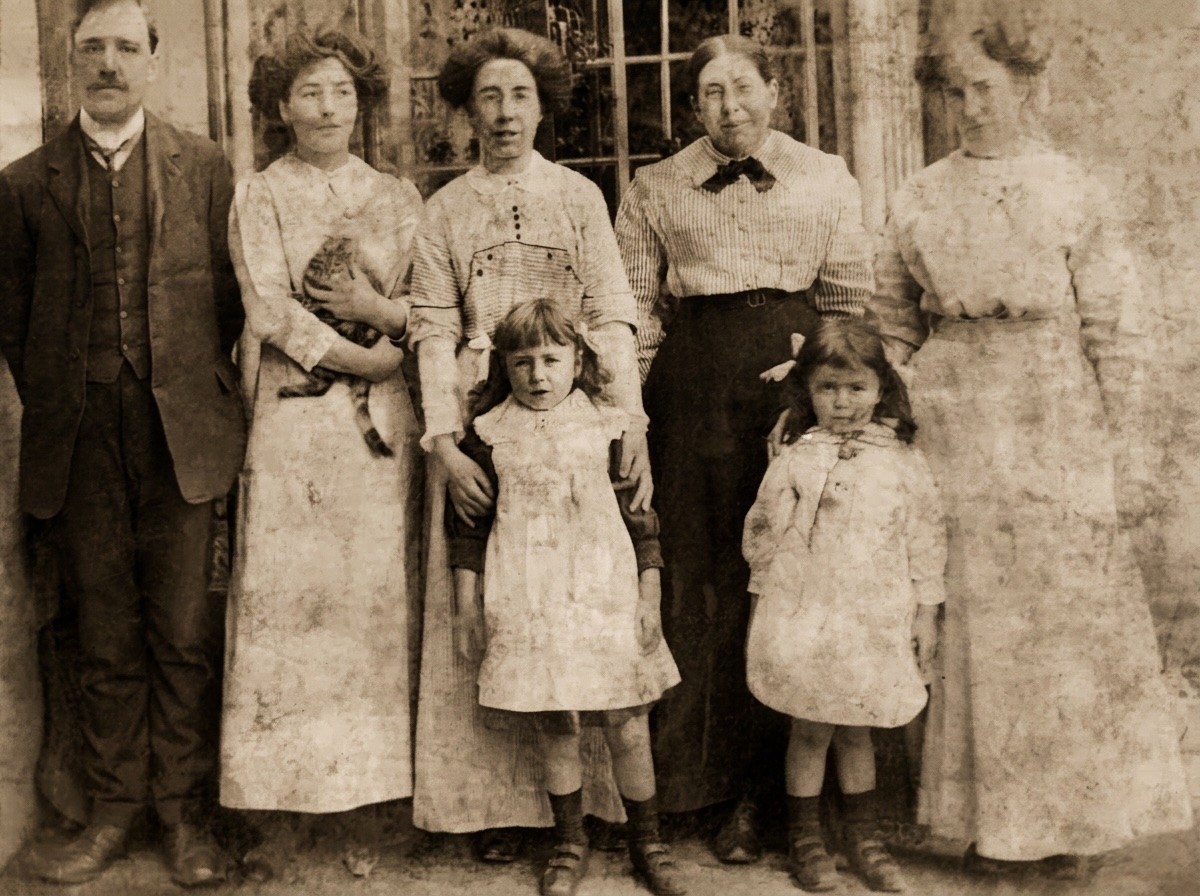
A picture of the Danby family: Ethel in the centre with daughters Nellie and Vi, Ethel’s mother +1 on the right, plus Harry next to his sister with the family cat.
Piecing a life together
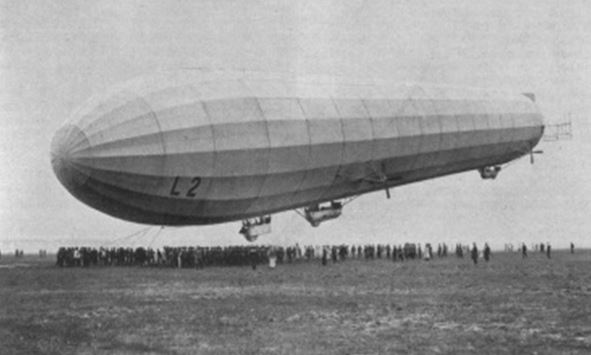
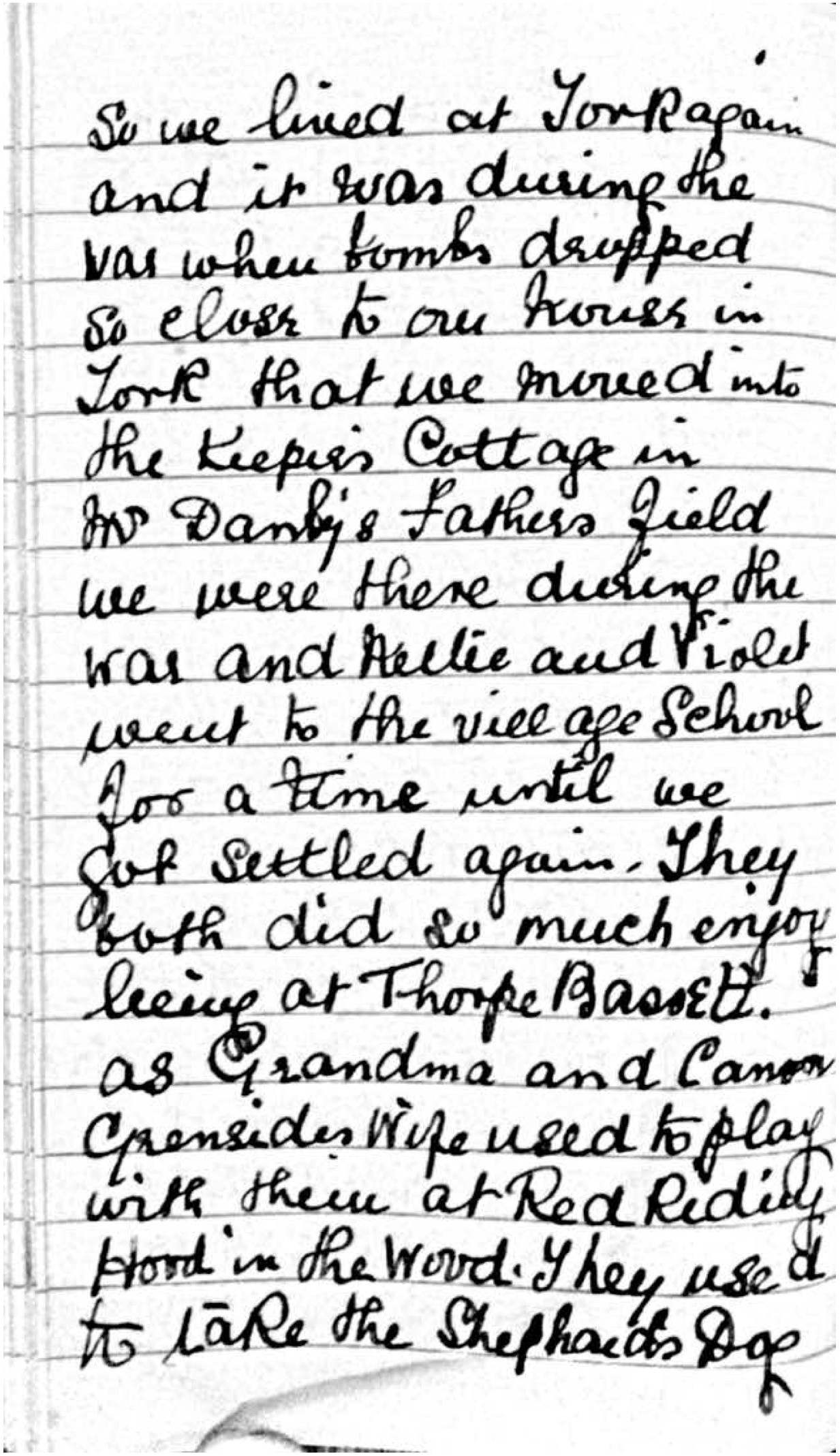
The booklet itself gave almost no dates. We had to piece the chronology together gradually through places, public figures and events mentioned in passing. There were occasional surprises and false trails. At one point Ethel wrote of bombs falling near their house in York during “the war”, and we naturally assumed she meant the Second World War. Only later did it become clear she was almost certainly describing the Zeppelin raid on York in 1916. Little by little, fragments of a life settled into place.
‘Terror from the Skies’ – the German Zeppelin LZ 18 (L 2), the kind that bombed York on May 2, 1916. (Public Domain image – Wikipedia)
What emerged was likely the only record of this woman’s life, and an unexpected glimpse into the social world created by the railways in the early twentieth century.
Growing Up in a Railway Family
Ethel’s father was stationed at Masbrough, near Rotherham, and railway life seems to have shaped the family’s existence from the beginning. Yet what struck me most was a wife and mother’s perspective on the world around the railway: chapel life, Sunday Schools, visiting the sick, church socials, choirs, Christmas treats for poor children, and a constant flow of neighbours and friends.
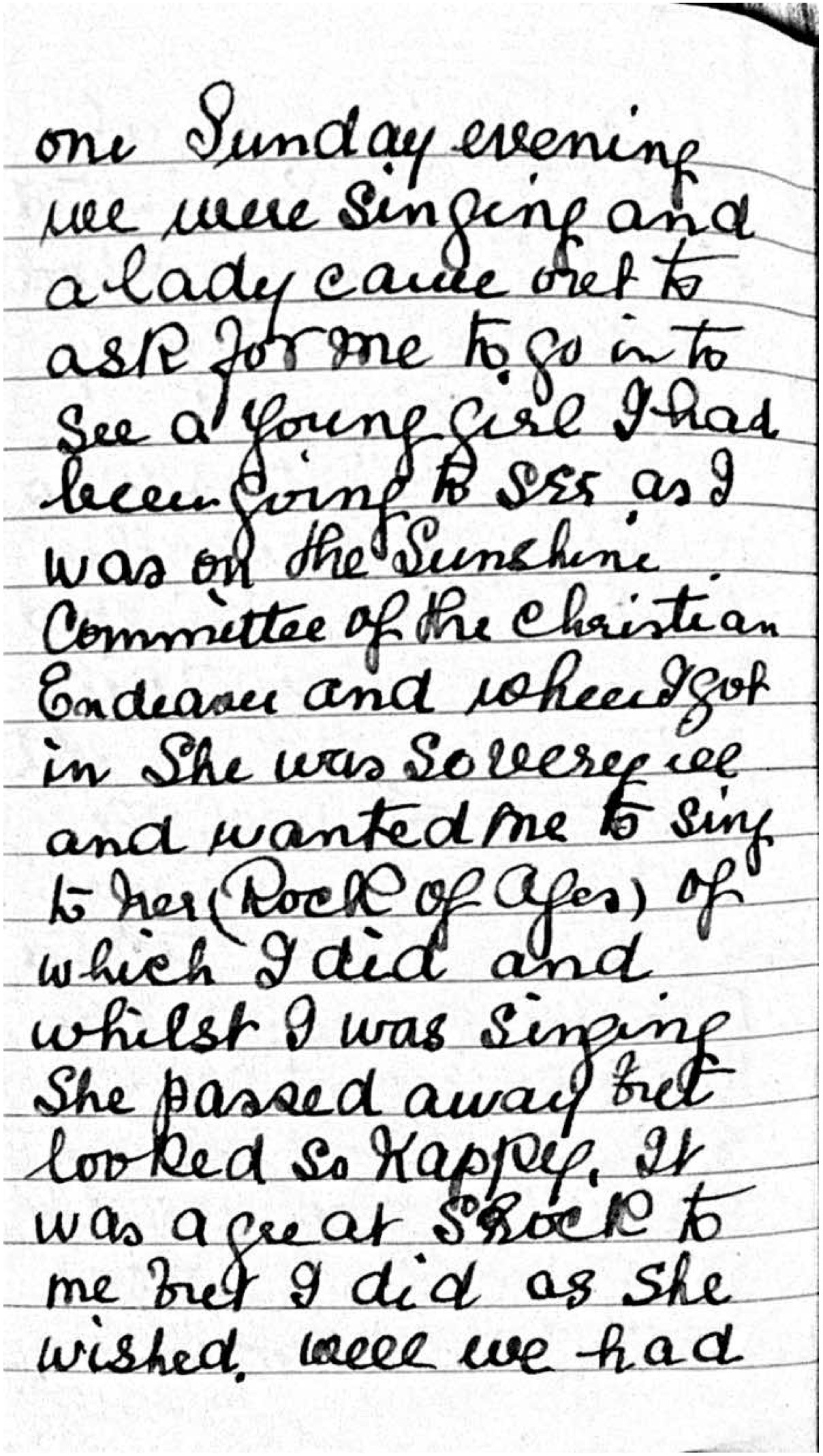
One of these vignettes stopped me short. Ethel records being called to visit a sick girl, who asked Ethel to sing “Rock of Ages”. She writes: “whilst I was singing she passed away but looked so happy.” It’s easy to forget that death, especially at a young age, was more common in the early 20th Century.
Ethel’s father was both railwayman and lay preacher:
“We always had family prayers night and morning. If Father was on duty my dear mother still took them.”
The railway and the chapel appear throughout the memoir almost as parallel structures around which life was organised.
After her father’s unexpected death, her mother married a Mr. Danby, and not long afterwards Ethel married his son Harry, a railwayman like her father. Their married life followed the railway line from place to place:
“We first lived at York a lovely old Minster Town but with been on the Railway one gets moved about a bit.”
Ethel and her family lived in York during the First World War.
Again, the understatement is striking. York, Pocklington, York once more, then Wetherby, Cherry Burton, Hessle, and later back again to Cherry Burton. Reading the memoir today, what feels surprising is not simply the number of moves, but how naturally she accepted them.
The railway created a curiously mobile life. And yet, wherever the family went, community quickly formed around them. At Wetherby, the whole family’s connection with church life was vividly described when the organist died. Ethel’s daughters Nellie and Violet were asked to take over temporarily. That created a popular spectacle. Ethel remembers the church becoming so crowded during services that chairs had to be placed down the aisle.
The most vivid sections describe their years at Cherry Burton station, where Harry Danby became station master:
“We were there 14 years and we were all so very happy there.”
The station sits at the social centre of the life she describes. People seem constantly to arrive, depart, call in, stop for conversation. Ethel remembers chatting with the bookstall manager and “the Lady of the tobaco kiosk” while waiting for trains.
Choirs gathered around the station lamp at Christmas. Friends travelled from Beverley and Hull to play in the village tennis tournament, watched by local tennis celebrity Colin Gregory.
Children from the village came into their home and gathered round the wireless. One evening, while the family were listening to BBC Children’s Hour, the presenters suddenly named them:
“Good night Nellie and Violet and good night Nellie and Violets Mam and Dad.”
How this came about it unclear, but Ethel records that the broadcasters later travelled by train from London to visit them at Cherry Burton. She gave them lunch and showed them around the orchard while local children came to meet their unexpected guests.
Chapel, Community and Everyday Kindness
What also emerges gradually from the memoir is the character of Ethel herself. She writes constantly of helping others: visiting hospitals, singing to the sick, making toys for children’s wards, taking flowers and fruit to neighbours, encouraging younger people in church life.
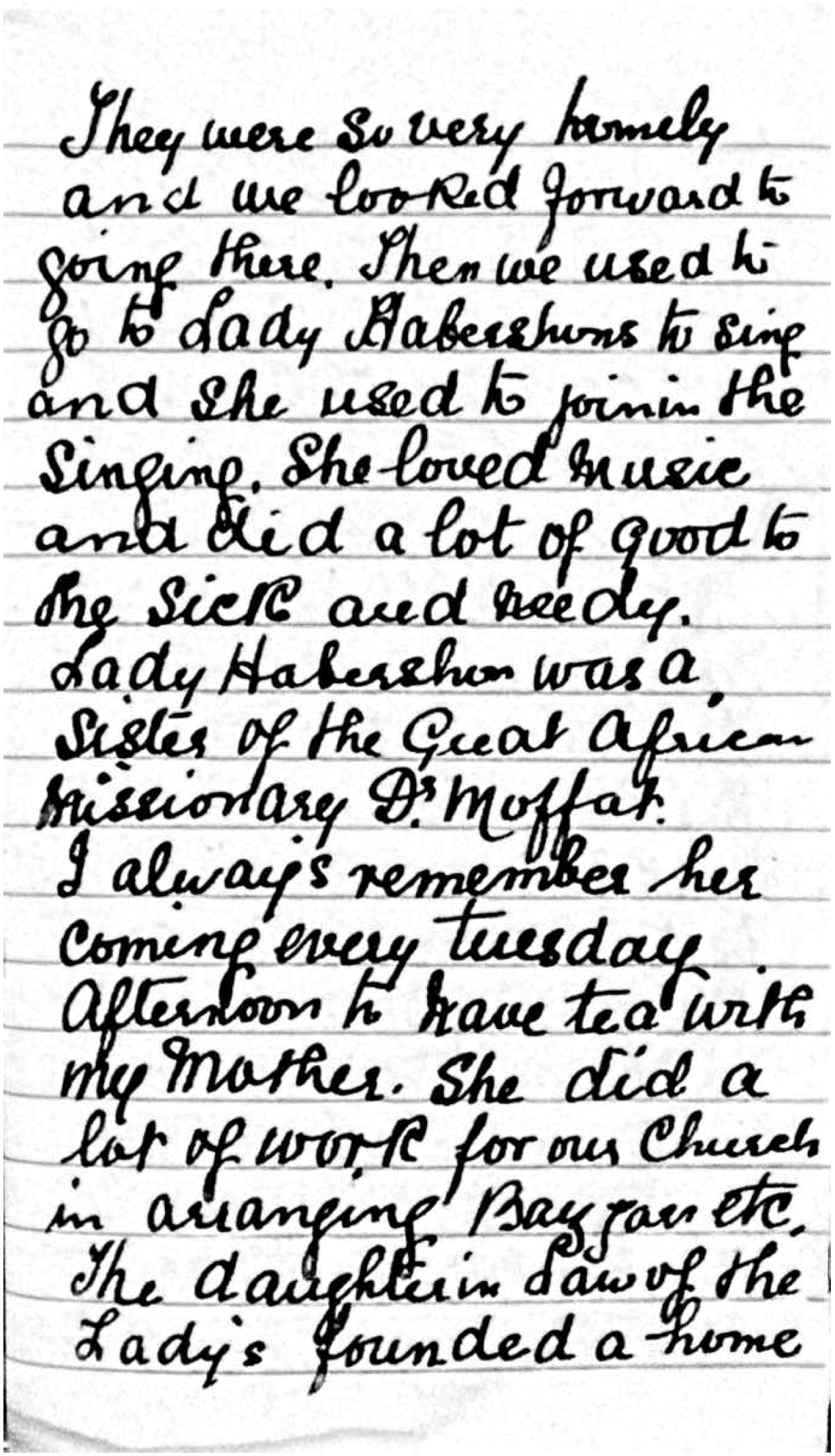
Ethel was inspired by the charitable work of a missionary.
Even when she writes about illness, bereavement and the strain of wartime, the tone remains remarkably cheerful. Again and again her attention returns outward to other people.
At one point she writes:
“I always feel happier making others happy.”
It’s a reflection that seems to explain her approach to life and illuminates the whole story.
Ethel sings for a young girl.
The Mystery Solved
All the while, as I continued to read, one question still remained unanswered. How had this little booklet survived among my grandparents’ possessions?
Eventually, hidden in the text, the answer appeared. Ethel, now frail and elderly, was writing warmly about the doctors who cared for her:
“We always have such faith in Dr & Mrs Dr Nye… They never look on the dark side.”
Dr and Mrs Nye were my grandparents. The booklet had survived through that relationship of care and trust. Somehow, after Ethel’s death, it had remained among their possessions, passing from one household into another until, decades later, I found it in my hands.
Ethel wrote her memories merely “to pass time away”. She could hardly have imagined that decades later they would offer such a vivid glimpse into the experience of a railway family in Yorkshire: a world of station postings, movement from town to town, chapel communities, wartime disruption, and lives organised around the railway.
It leaves me wondering how many similar stories may still exist unnoticed in drawers, attics and family boxes, waiting for somebody to pause before throwing them away. And whose memories, among our own families and friends, might still have the potential to be recorded before they disappear altogether? Saving them isn’t difficult these days. A few brief conversations with a phone to record and transcribe them—that’s all it takes.
What Remains
What mark do we each leave on the world? Who will remember us?
Ethel’s daughters had no offspring and—as far as we know—this tiny booklet is the only record of this ordinary yet remarkable, cheerful, resilient railway life.