On 18 September 1996 the Railway Heritage Act came into force to help protect Britain’s railway heritage. Following the privatisation of British Rail in the mid-1990s, there was a risk that important railway artefacts and records could be lost. The Act created a system to identify and safeguard significant objects while in use on the railway, ensuring they could later be preserved by museums and heritage railways.
Initially, a statutory body called the Railway Heritage Committee managed this process. In 2013, these responsibilities transferred to the Science Museum, which created the Railway Heritage Designation Advisory Board (RHDAB).
Over the past thirty years, 1000+ objects have been designated, including paintings, locomotives, technical drawings, memorial plaques and more. Together, these objects and records help tell the story of the people, innovation and engineering behind Britain’s railways.
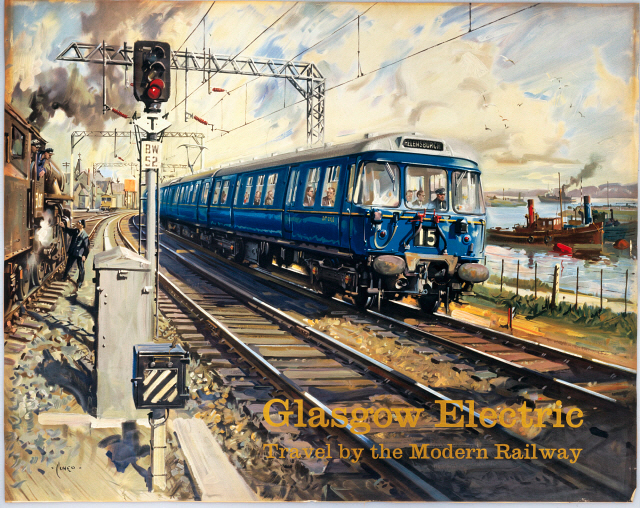
Glasgow ‘Blue Trains’ – the first designation after the Act
Class 303 electric multiple units were a familiar sight around Glasgow from 1960 until their withdrawal in 2002. Replacing steam trains, Class 303s brought fast, frequent electric services to suburban Glasgow, transforming the commuter experience. Passengers marvelled at their modernity – cleaner and quicker to accelerate, their carriages were graced with air-assisted sliding doors, then very much a novelty outside of London!
Initially painted in a distinctive Caledonian blue livery, Glaswegians embraced Class 303 giving them the nickname “Blue Trains”, despite various changes to its appearance.
The Heritage Railway Committee made a Class Designation in November 1996, meaning that all 50 surviving Class 303 units in use were protected. A representative model was chosen for preservation, comprising of Class 303 unit 032 and a centre car from set 023.
This unit is now cared for by the Scottish Railway Preservation Society at the Museum of Scottish Railways. Guided tours celebrate the Blue Train’s design and engineering as well as the place it holds in people’s memories. Volunteers are always adding to their Blue Train folklore – expect stories of children throwing cushions from windows, memories of racing to get the seats with the best view, and the unlikely reuse of the train’s distinctive seat coverings to make three-piece suits!
Solidarity and support
Railway stations and railway workers have long traditions of charitable collecting and demonstrating solidarity in times of war and peace.
Following Russia’s invasion of Ukraine in 2022, freight operator GB Railfreight named locomotive 66708 “Слава Україні” (“Glory to Ukraine”) in solidarity with the Ukrainian people.
RHDAB chose to designate this nameplate to “remember both the conflict in Ukraine, and the railway family’s response.” This response included transporting 1500 tonnes of aid supplies donated by UK railway workers to Ukraine on the UK Rail for Ukraine train in April 2022.
Painted in the blue and yellow colours of the Ukrainian flag, GB Railfreight explained at Glory to Ukraine’s unveiling, “the locomotive honours the people affected by the conflict as they continue to courageously defend their homeland.”
The designated nameplate can be spotted as Glory to Ukraine continues hauling freight around the UK.
A much older railway charity artefact can be found at the National Museum of Scotland. Manufactured during the First World War by Glasgow’s William Beardmore & Co, this 15-inch Howitzer shell casing was intended for the battlefield but was instead converted to a charity collecting box and placed inside Glasgow Queen Street Station. It raised thousands of pounds for local hospitals and became a local landmark for generations of Glaswegians.
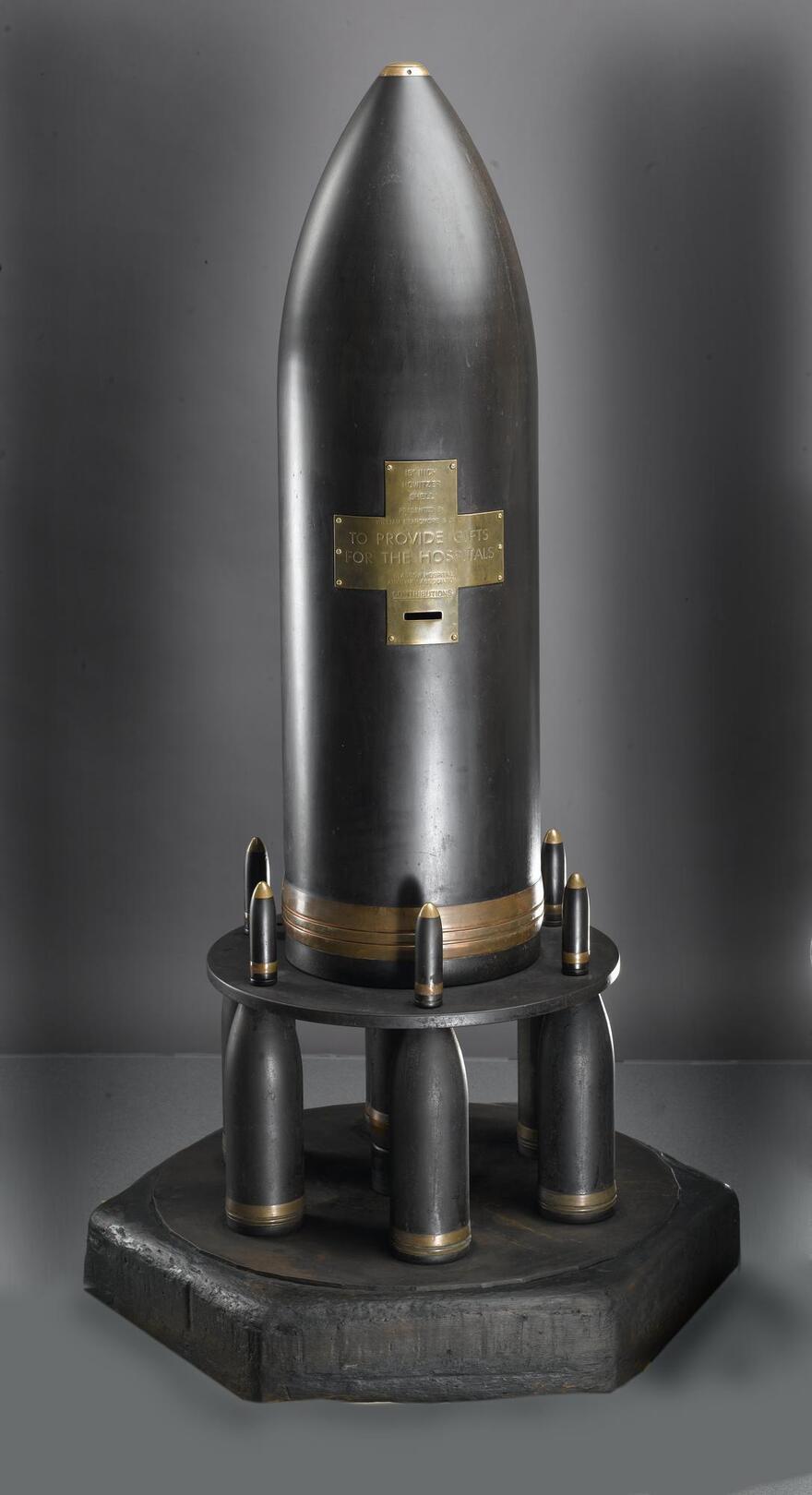
Image courtesy of National Museums Scotland.
Brief Encounter Clock
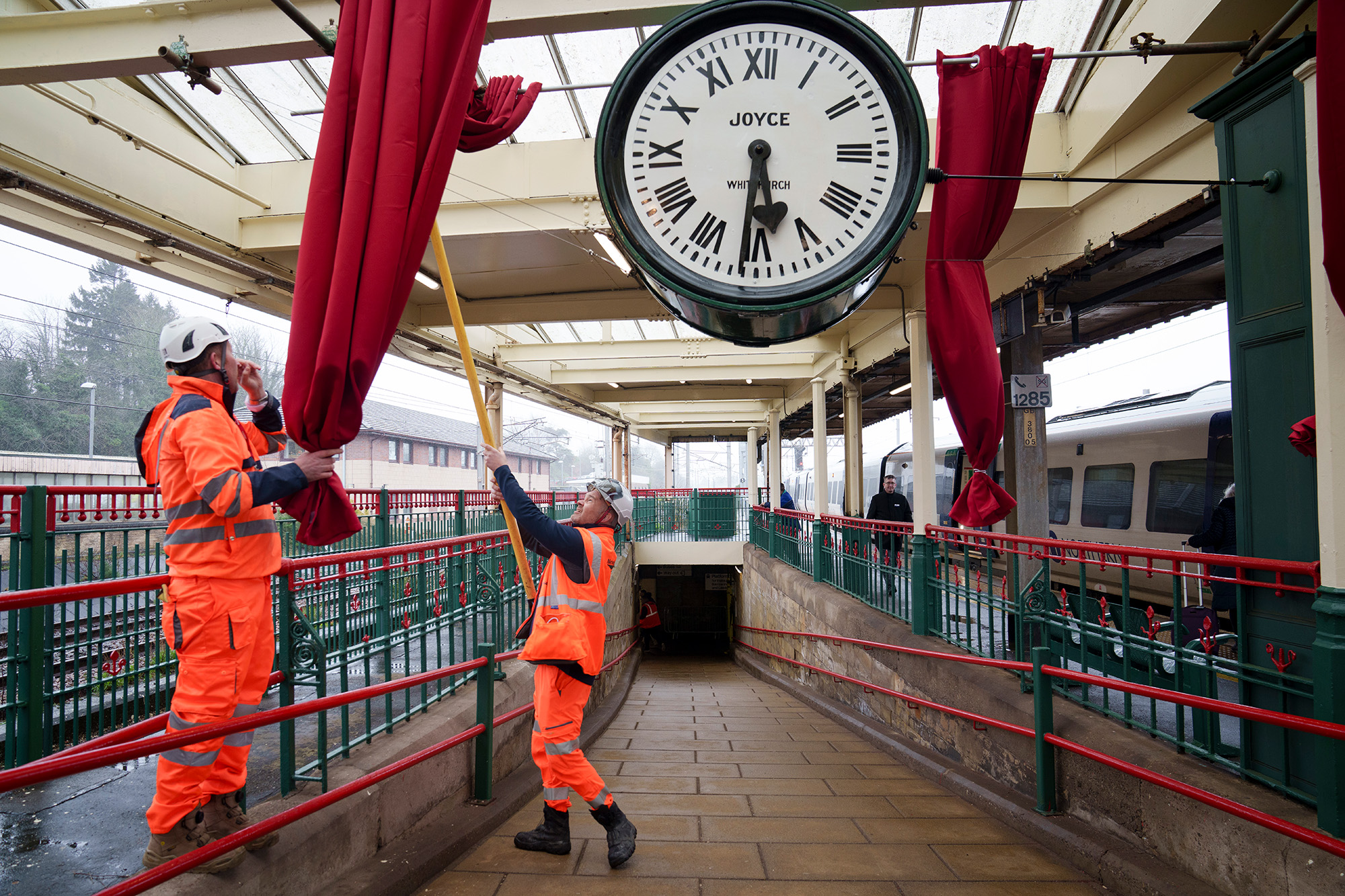
Although set in the fictional Home Counties town of Milford, wartime romance Brief Encounter was actually filmed at Carnforth Station in Lancashire in 1945. This busy station was considered far enough from major cities to be safe from German bombing raids.
The film tells the story of a passionate affair between two married strangers who meet in a railway station. Director David Lean used Carnforth Station’s iconic clock as a visual reminder of the pressures of time on the couple’s relationship, with shots of the clock hinting at themes of waiting and longing for each meeting.
The clock went missing in the 1980s as Carnforth Station fell into disrepair. It was later found and repaired by local resident Alan Smith. The Railway Heritage Committee designated the clock in 2000, and it was returned to the station in 2002. Carnforth Station has since been refurbished and its clock, heritage centre and Brief Encounter tearoom continue to draw fans of this classic film.
Places of memory
Railway stations are home to many memorials, including those to workers who died in the First and Second World Wars, and people who died in accidents.
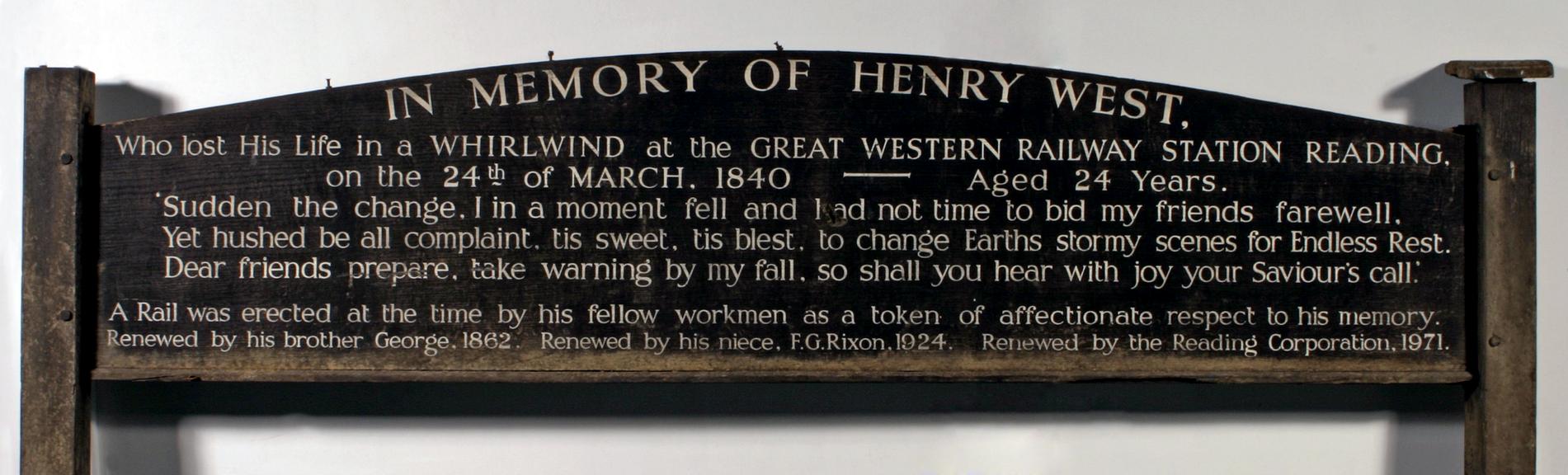
One unusual memorial to a railway worker can be spotted in the National Railway Museum’s North Shed.
Henry West was a 24-year-old carpenter preparing the new Reading Station for opening in 1840. While working on the roof a sudden freak “whirlwind” swept him up, carrying him 200 feet, before dropping him to his death.
His colleagues erected a graveside memorial bearing a poem:
“Sudden the change, I in a moment fell and had not time to bid my friends farewell,
Yet hushed be all complaint, tis sweet, tis blest, to change Earths stormy scenes for Endless Rest.
Dear friends prepare, take warning by my fall, so shall you hear with joy your Saviour’s call.”
Henry West’s death was probably caused by a tornado, an incident so rare in Berkshire that the word wasn’t even used in English yet. This memorial is a reminder of the many workers injured and killed while constructing Britain’s railways.
Sudbrook Pumping Station and the Severn Tunnel
Some of our most intriguing designations are tucked away in unusual buildings and structures.
Deep in the Severn Tunnel and nearby Sudbrook Pumping Station are artefacts linked to one of Victorian Britain’s greatest engineering achievements.
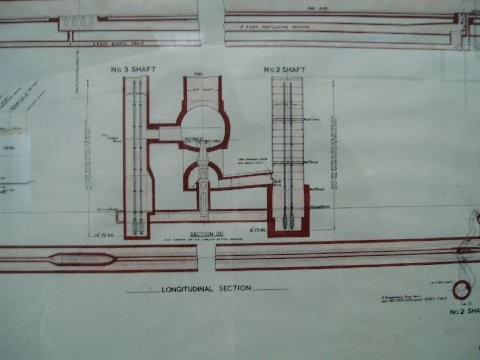
The Severn Tunnel was constructed between 1873 and 1885 by Great Western Railway’s Chief Engineer Sir John Hawkshaw. Stretching 7km, with 3.6km running directly beneath the Severn Estuary, this engineering project would dramatically reduce the journey time between South Wales and Western England.
During construction of the Severn Tunnel in 1879, workers struck the “Great Spring”, flooding the works and threatening the project.
Diver Alexander Lambert made a series of dives hundreds of metres into the flooded tunnel using a Fleuss re-breather, one of the earliest self-contained breathing apparatuses. This is believed to be the first time this equipment was used in Britain.
Working alone underwater in total darkness, Lambert closed a sluice door, holding back the Great Spring and allowing engineers to control the flow of water and complete the Severn Tunnel.
Hawkshaw realised permanently excluding water from the tunnel was unfeasible, and so he scaled up his plans for Sudbrook Pumping Station in Monmouthshire to remove 50,000 litres of water each day. The pumps have been upgraded several times since then, most recently in 2022, but the engineering principle of draining and removing water from the tunnel continues.
The sluice door Lambert closed, his reverse-thread spanner, commemorative plaques and engineering drawings of the tunnel were all designated in 2004, preserving the story of this remarkable feat of railway engineering.
HST Power Car 43102: The Journey Shrinker
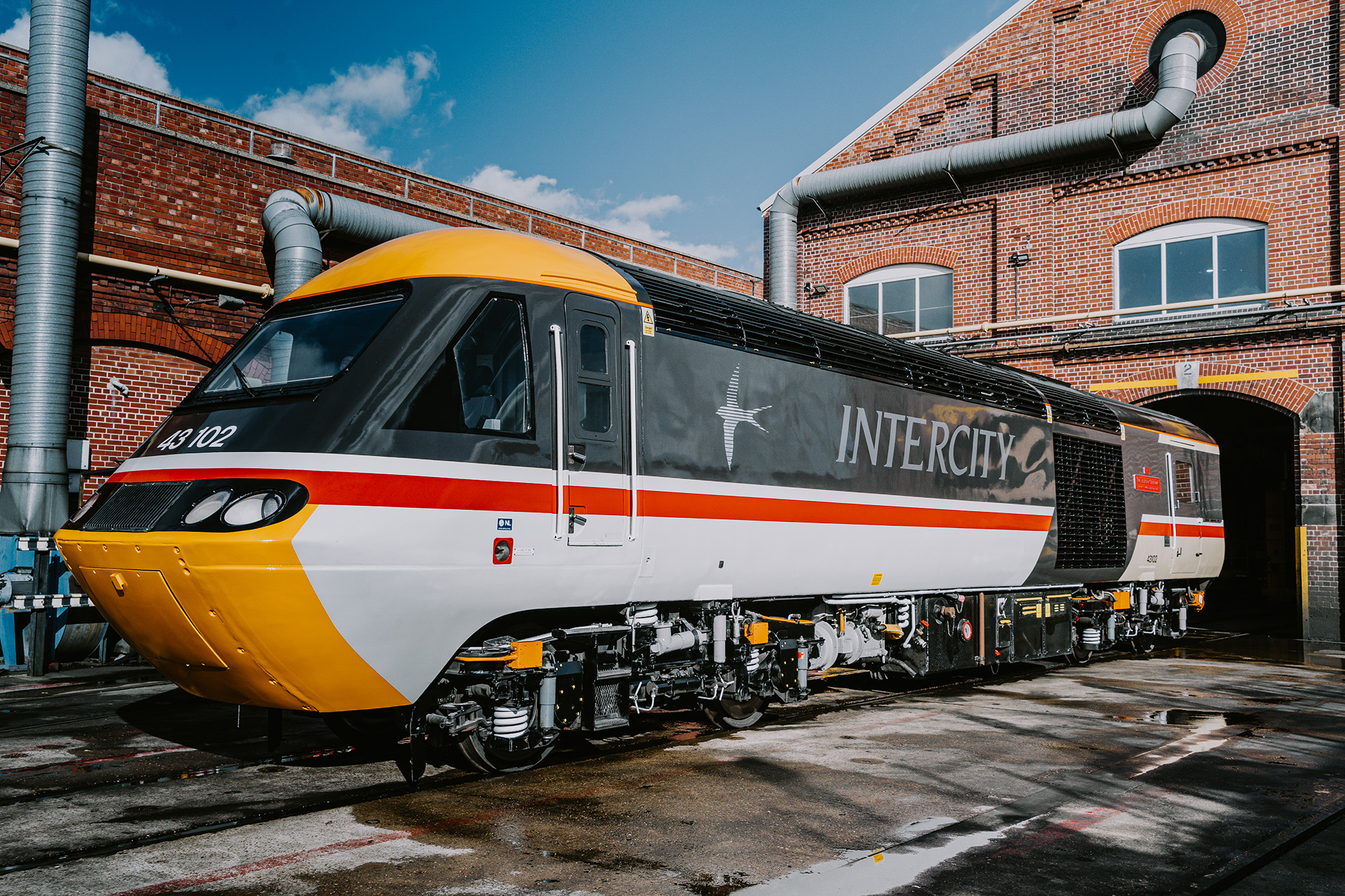
HST Power Car 43102 is the world’s fastest diesel locomotive, having reached 148.5 mph during tests between York and Darlington in November 1987.
Its combination of speed and comfort transformed long distance rail travel. Developed by British Rail in the late 1970s to compete with the motorways, their goal was 125 mph train travel. This was achieved by placing a relatively light power car at each end of the train, resulting in 4500 horsepower. Having two power cars increased reliability in the case of breakdowns and resulted in quicker turnarounds at terminus stations. Placing the diesel engines at the ends of the train also protected passengers from the noise and vibrations, resulting in a smooth and quiet journey.
HST Power cars were used with Mark 3 coaches, designed especially for high-speed travel. British Rail called this train InterCity125 and marketed it as “The Journey Shrinker”, emphasising its speed and how easy it now was to travel distances that previously required an overnight stay.
HST Power Car 43102 and a corresponding Mark 3 Buffet car were designated in 2019. After 39 years of service, in 2021 they were retired. Repainted in iconic Intercity Swallow livery and renamed “The Journey Shrinker”, 43102 was donated to the National Railway Museum and can now be seen at Locomotion Shildon alongside the Mark 3 coach.
The next thirty years
RHDAB will continue to designate railway heritage from England, Scotland and Wales. As train operators transition to Great British Rail, we are working to capture our shared railway heritage and we continue placing important vehicles, memorabilia and records in museums and heritage railways. We welcome designation nominations from the public, helping to ensure the Designation Register continues to reflect the full story of Britain’s railways.
Browse the Designation Register and find out more about our work.