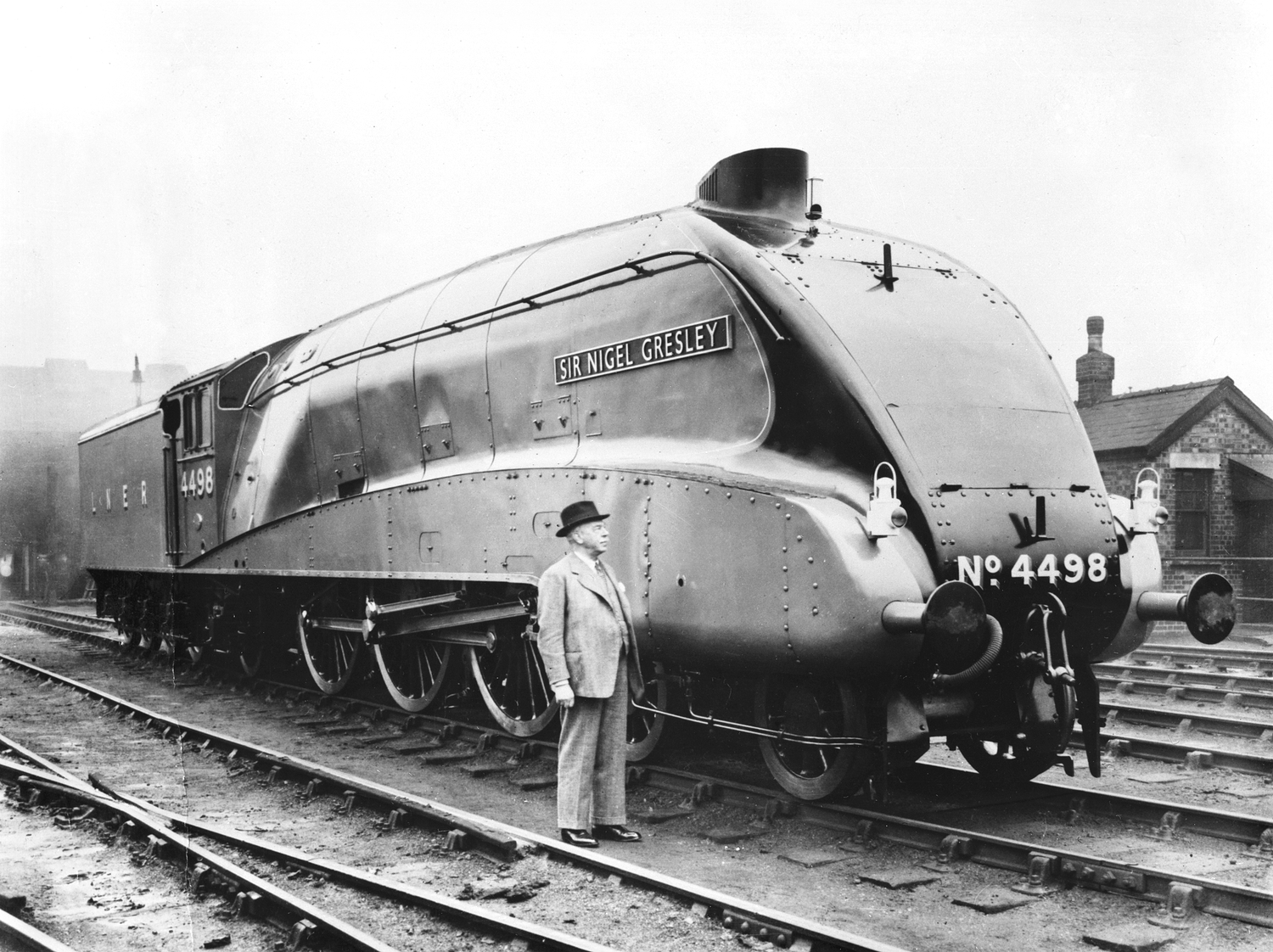
Herbert Nigel Gresley was born in Edinburgh on 19 June 1876, the son of the Reverend Nigel Gresley of Netherseal in Derbyshire.[1] Finishing his education at Marlborough College, Gresley obtained an apprenticeship at the London & North Western Railway’s (LNWR) Crewe Works in 1893. He was supervised by Francis Webb, the company’s Locomotive Superintendent.[2] In 1898, he joined the Lancashire & Yorkshire Railway (LYR) as pupil to Locomotive Superintendent John Aspinall at the company’s Horwich Works in Lancashire. He initially worked in the design office and later gained practical experience of running locomotives at Blackpool.[3] He became Assistant Works Manager at Newton Heath Carriage and Wagon Works in Manchester and married Ethel Fullagar in 1901. He was eventually promoted to the LYR’s Assistant Carriage and Wagon Superintendent.
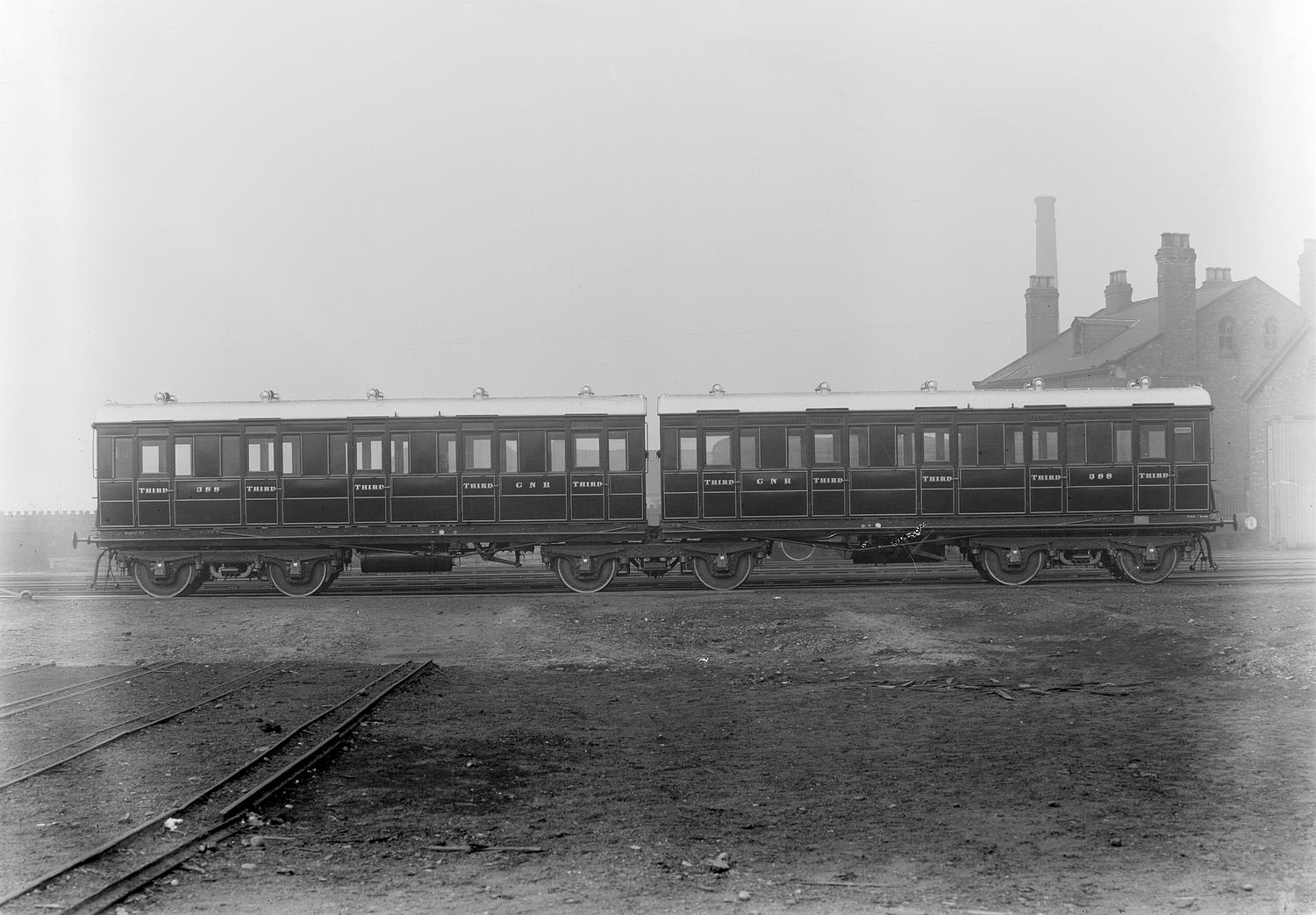
In 1905, Gresley started work on the Great Northern Railway (GNR) as Carriage and Wagon Superintendent under that company’s Locomotive Engineer, Henry Ivatt. While in post, he was responsible for the development of a new range of polished teak carriages notable for their elliptical, rather than clerestory, roofs, and higher seating capacity.[4] In 1907, Gresley experimented with carriage articulation—the semi-permanent coupling joining carriages together using a common pivot point to reduce weight and drag.[5] The principle would be revisited again in the future, both for suburban and express passenger use.
Ivatt’s retirement in 1911 saw Gresley’s promotion to Locomotive Engineer at Doncaster Works. Locomotives designed under Gresley’s direction included several 2-6-0s and 0-6-0 goods locomotives; 2-8-0 heavy freight locomotives and the Class N2 0-6-2T for suburban passenger services. In 1922, the first of the 3-cylinder ‘Pacifics’ emerged, having been in part inspired by the Great Western Railway’s (GWR) solitary example, Great Bear, designed by George Churchward.
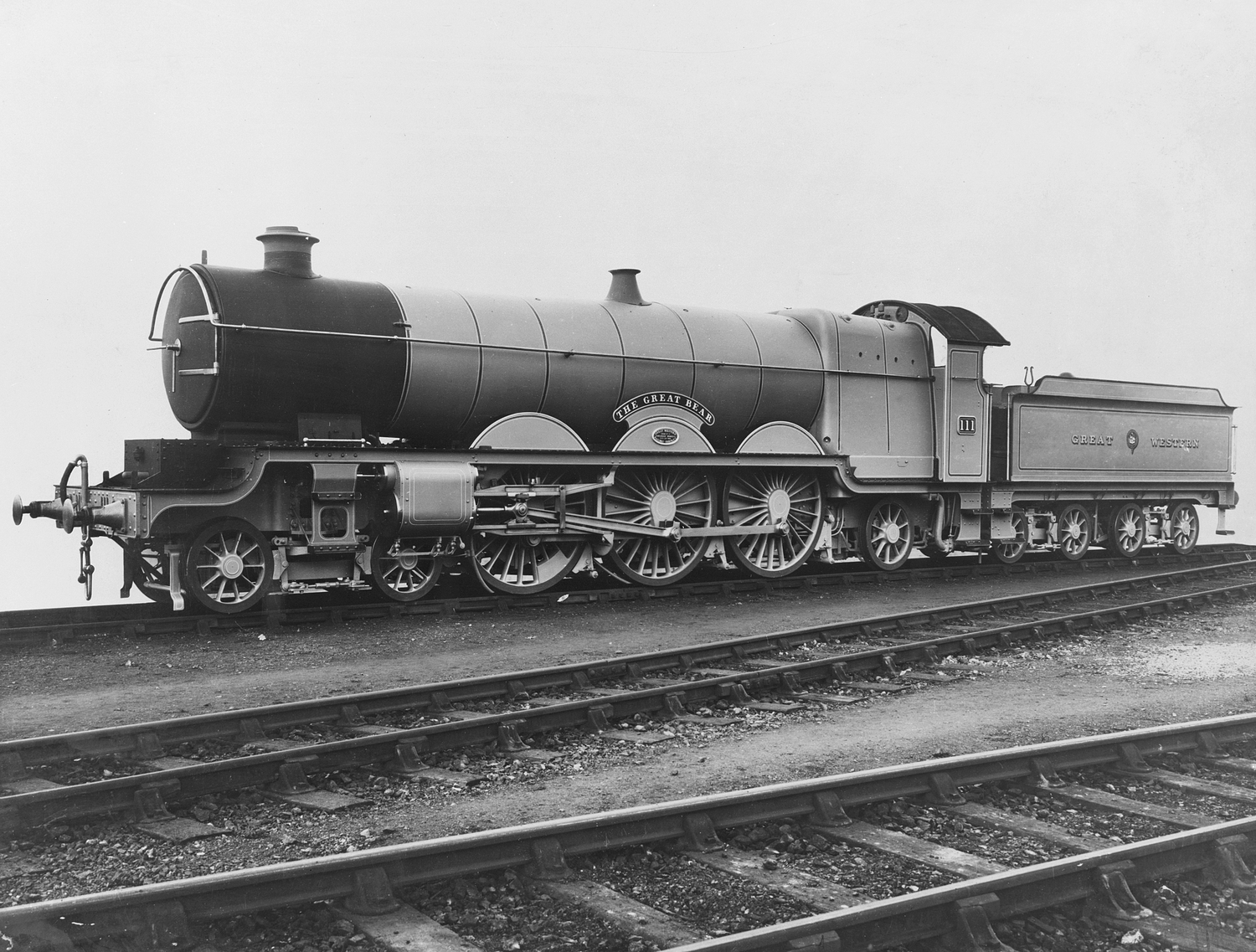
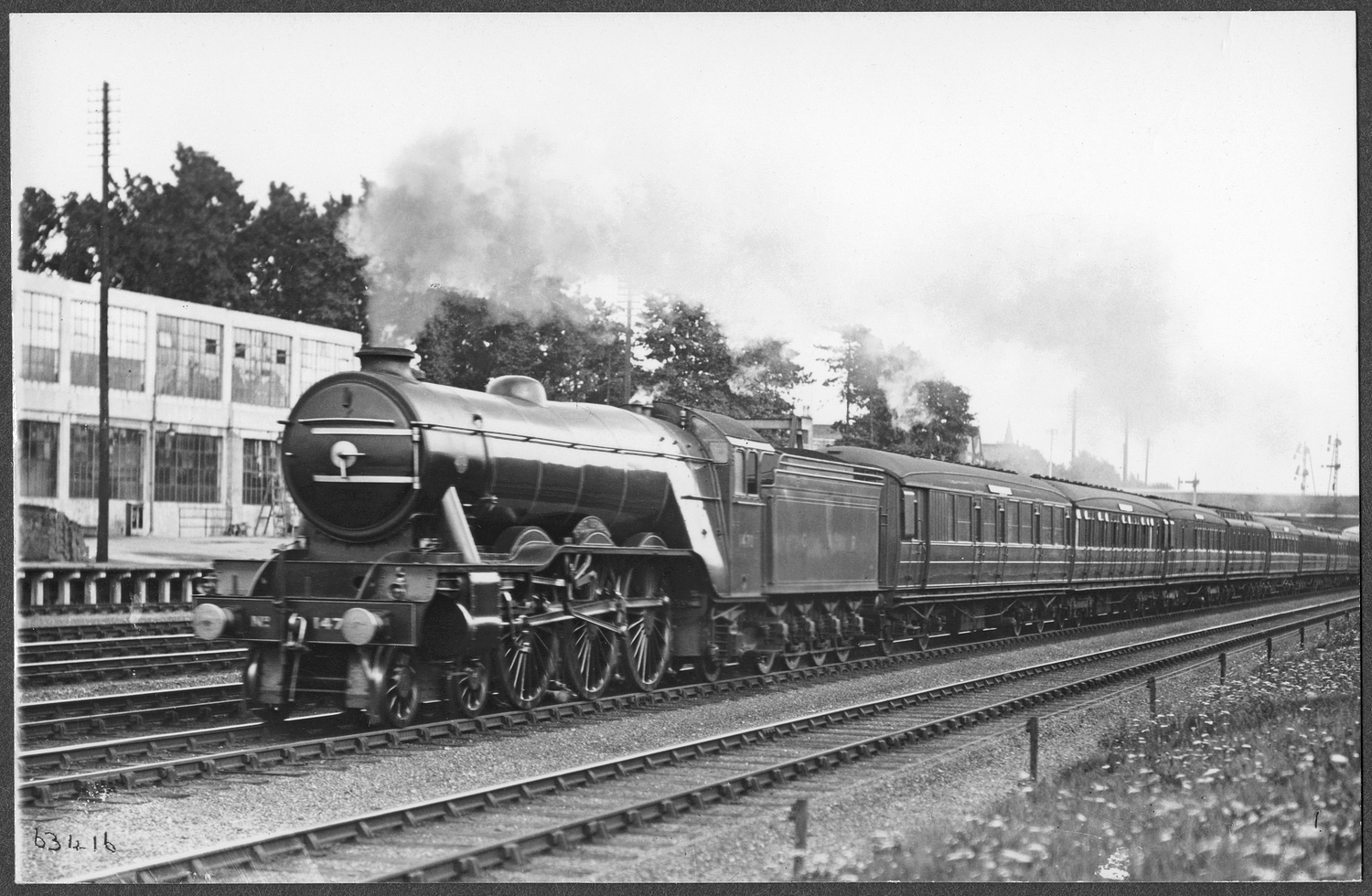
Gresley’s name is also associated with the weight-saving conjugated valve gear through which the inside valve motion of a 3-cylinder locomotive was derived from the outside cylinders through levers.[6] This developed research undertaken by Harold Holcroft, then working for the South Eastern Railway, and the design was finalised with his input.[7] This highlights how collaboration across an industry and within an organisation, rather than individual enterprise, delivered the goods. Indeed, Gresley relied upon a talented team of engineers including Oliver Bulleid, Bert Spencer, Frank Wintour and others to design and build the vehicles attributed to his name.[8]
The grouping of many Britain’s railways into four major companies in 1923 placed Gresley’s career in the balance. The post of Chief Mechanical Engineer for the newly formed London & North Eastern Railway (LNER) was offered to John Robinson of the Great Central Railway. However, Robinson chose to retire, and Gresley was appointed to the post.[9] Having responsibility for the entire LNER, his main challenge was to develop a fleet of locomotives capable of running throughout the system. For long distance express passenger work along the East Coast Main Line, the Class A1 fitted the bill, and the first example to enter service under LNER ownership was none other than No. 1472—subsequently No. 4472 Flying Scotsman.
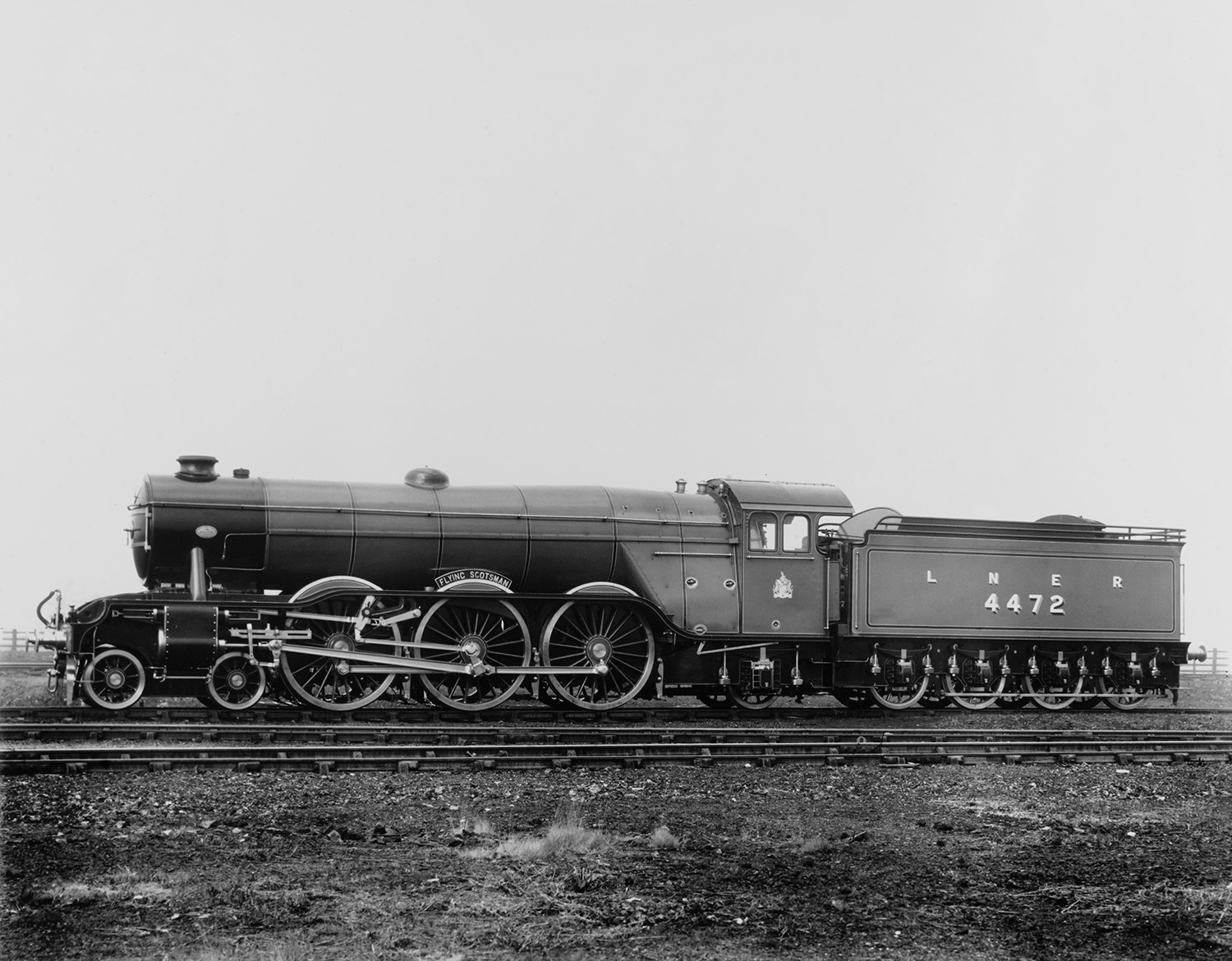
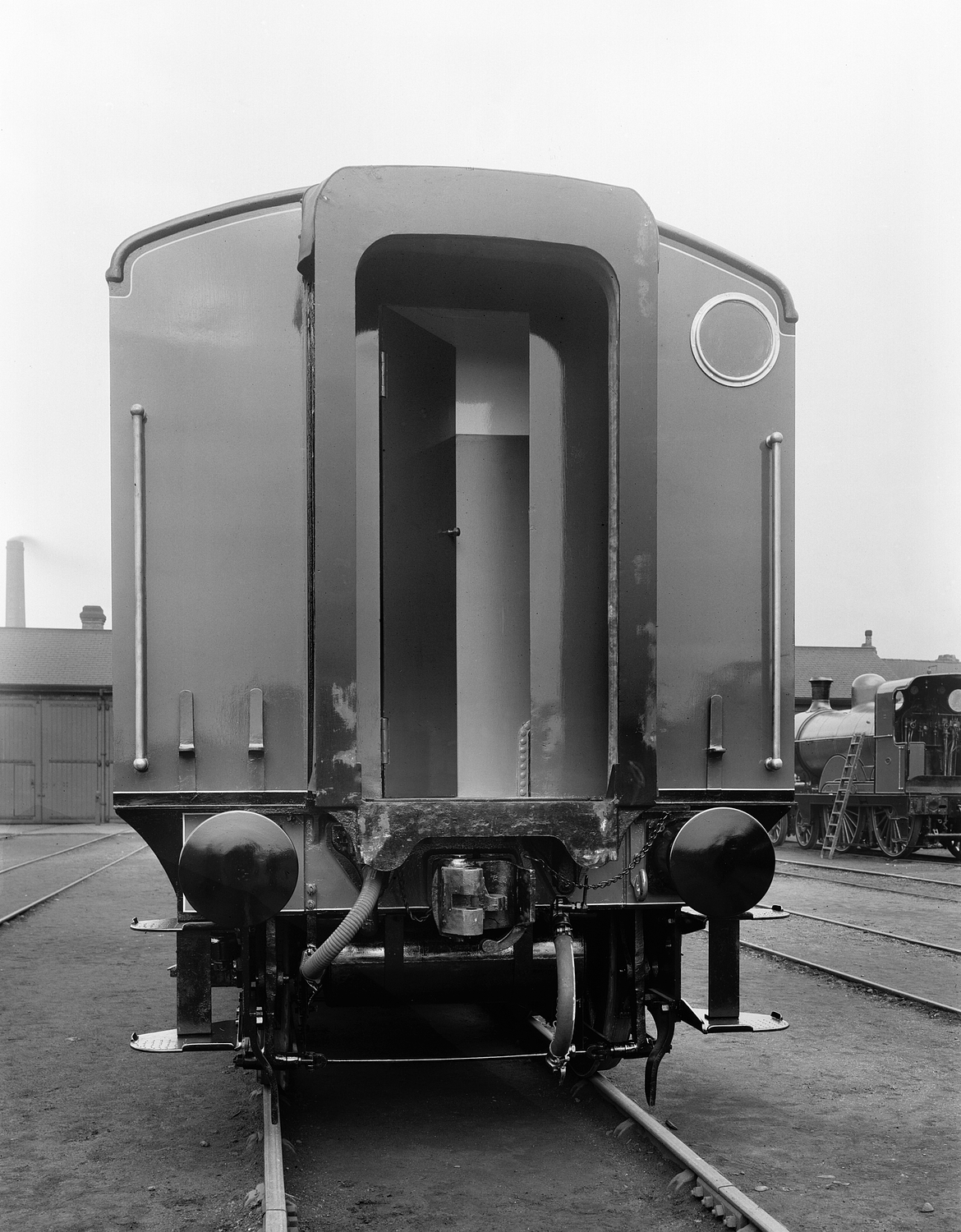
However, the design needed improvement, particularly to increase its operating range. A series of exchange trials with the GWR took place in 1924, with that company’s 4073 ‘Castle’ class 4-6-0s showing superior power and fuel economy. Gresley’s receptiveness to new ideas is exemplified by modifications made in 1926 to achieve longer valve travel that better harnessed the expansive power of steam. The result was less coal and water consumption and greater range, and the modifications were gradually applied to the remainder of the class.[10] Further improvement included increased boiler pressure and more superheating to increase efficiency. The new ideas were incorporated into Class A3 ‘Super Pacific’, which emerged in 1928.[11] That year saw the introduction of another Gresley innovation, the streamlined corridor tender that allowed crew changes to take place on the move, permitting non-stop running between London and Edinburgh. Gresley experienced personal tragedy the following year when Ethel died.
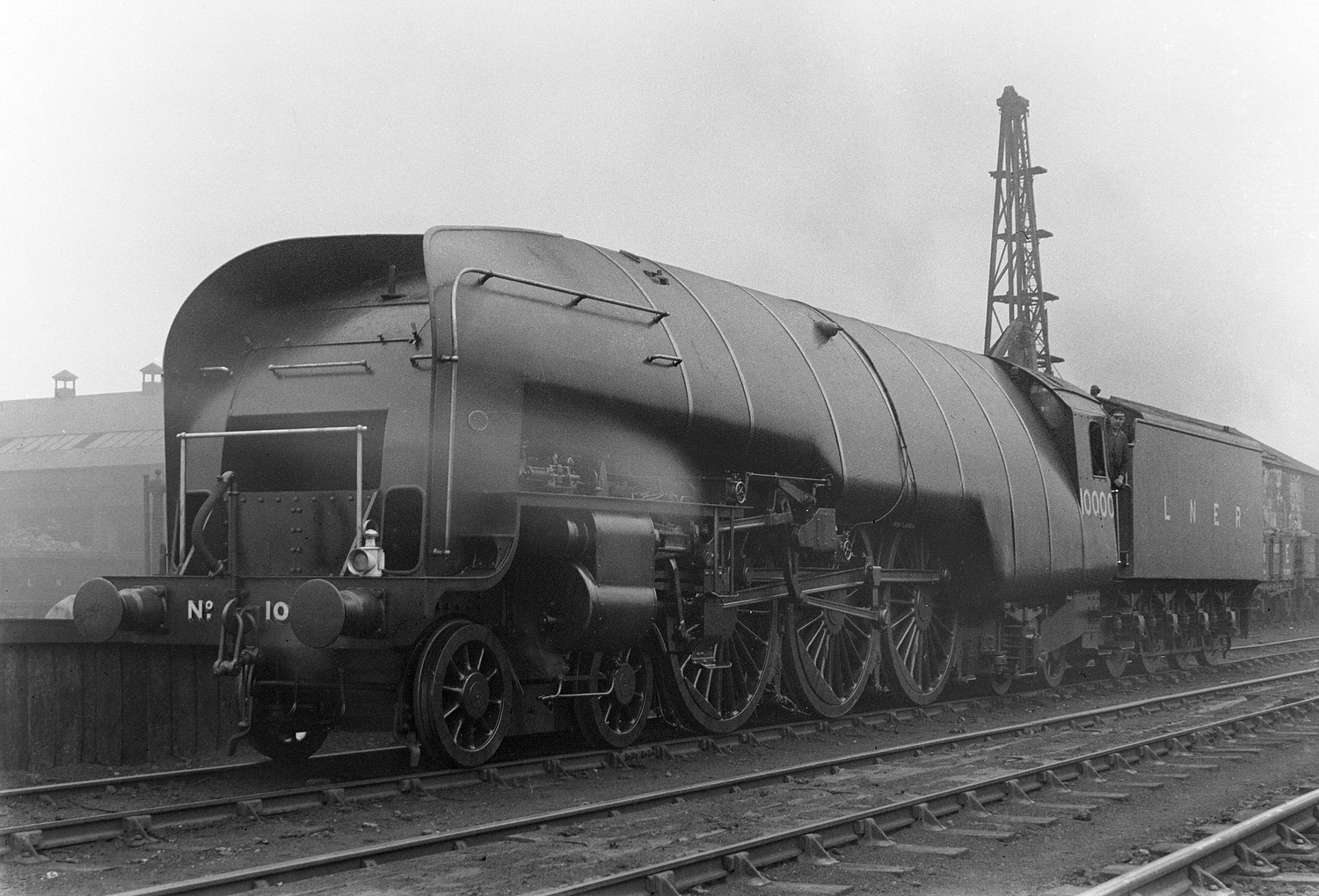
Experimental designs like the Class W1 4-6-4 locomotive of 1929 were also pursued. This featured a high-pressure marine boiler to achieve greater efficiency in operation, though this was ultimately unsuccessful.[12] However, what may be considered Gresley’s masterpiece would emerge in 1935—the Class A4. Responding to developments in Europe, notably Germany’s diesel-powered ‘Flying Hamburger’, the design featured a host of advances on the Class A3, with sustained high-speed justifying the use of streamlining.[13] In designing the locomotive, Gresley continued a long-standing collaboration with Dr Frederick Johansen, a specialist in aerodynamics who was by then employed by the London, Midland & Scottish Railway.
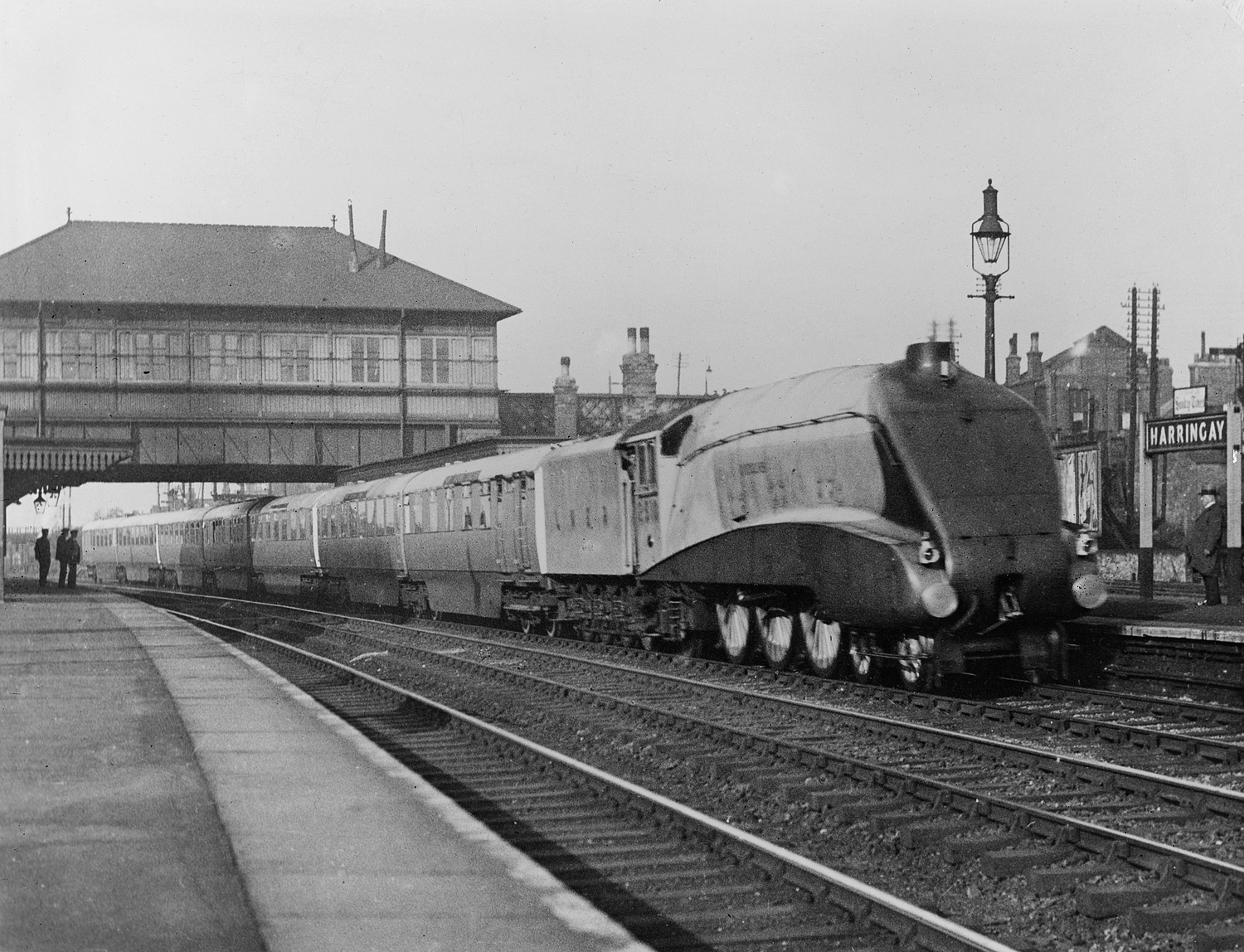
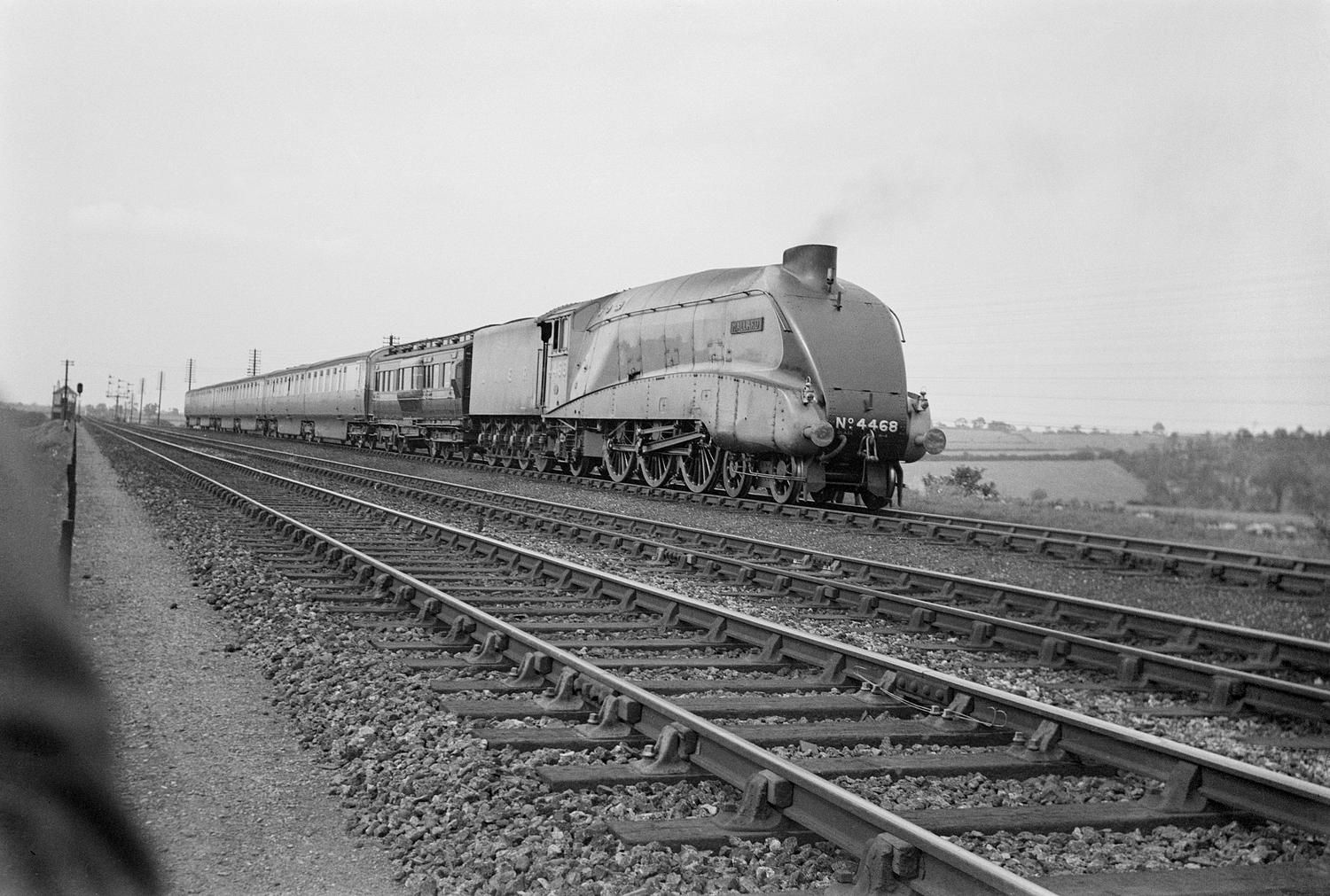
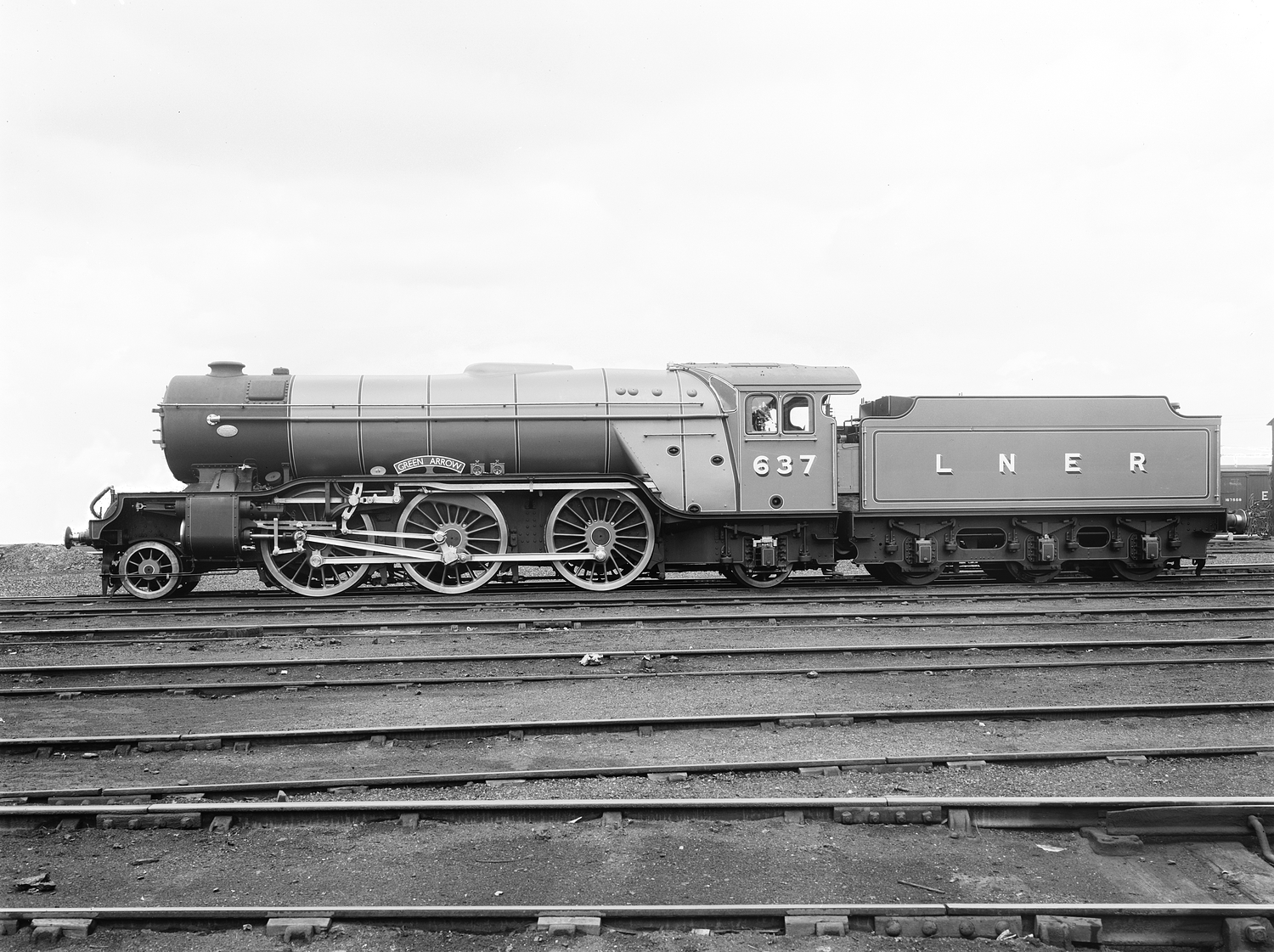
The new locomotive type would mark the Silver Jubilee of King George V upon entering service.[14] Coupled with a new, streamlined set of articulated carriages, the ‘Silver Jubilee’ express train took speed and style to new heights on Britain’s railways. There was more to come, and on 3 July 1938, one A4 would carve its place in railway history by peaking at 126mph during a test run, capturing the world speed record for a steam locomotive in the process—No. 4468 Mallard.[15] Other notable designs developed under Gresley included the Class P1 and P2 2-8-2s for fast, heavy goods and passenger work respectively and the Class V2 2-6-2s.
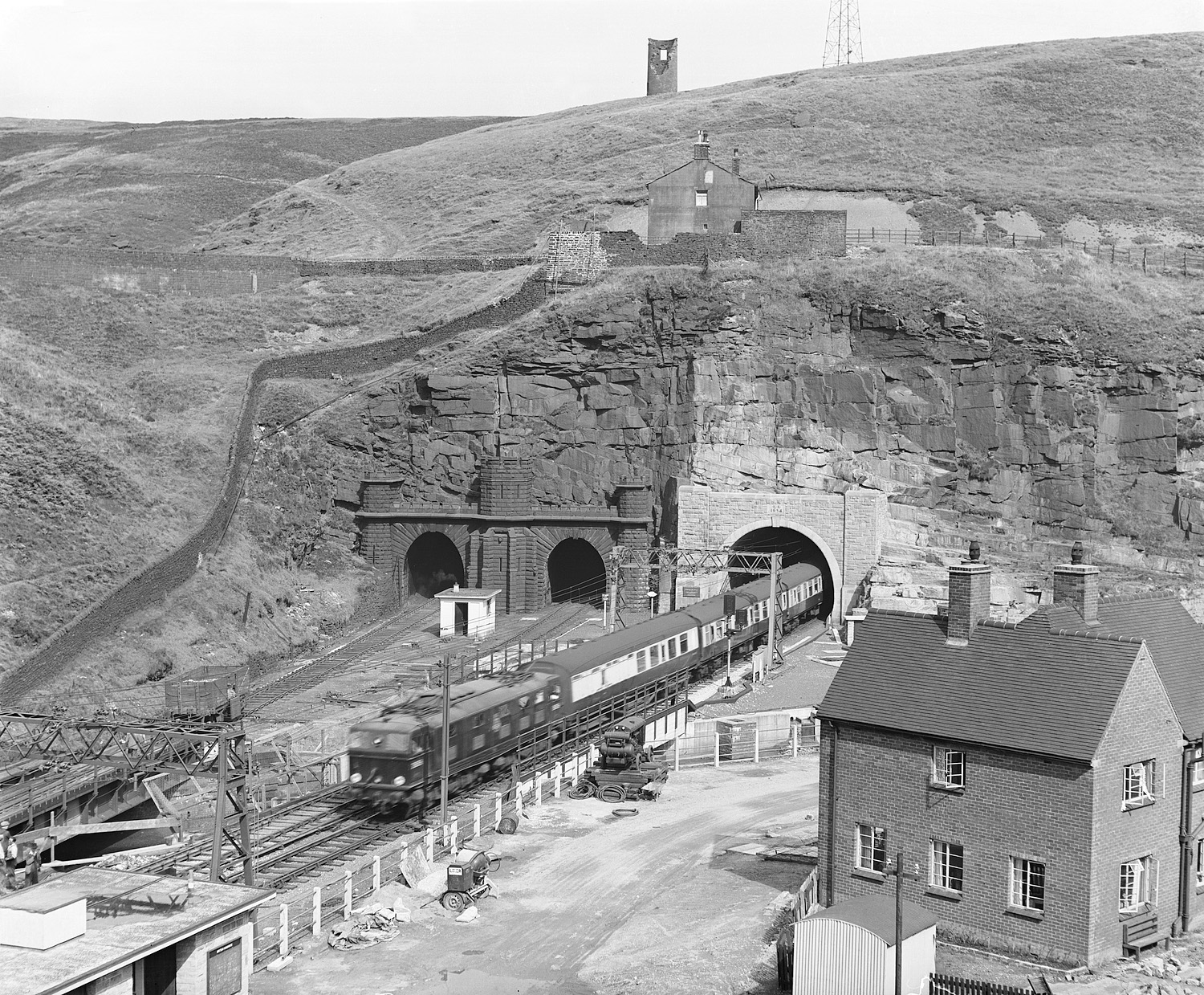
Gresley’s work in the field of diesel and electric railway traction is perhaps lesser known but is nevertheless important. In 1936, Gresley oversaw the design of electric locomotives for a new 1.5Kv overhead DC electrification scheme between Sheffield and Manchester.[16] The result was the Class EM1 and EM2 BO-BO electric locomotives, but the overall scheme was interrupted by the Second World War and was not completed until 1953. At the same time, a plan to improve line capacity between London Liverpool Street and Shenfield also involved electrification, and the innovative Class AM6, which featured pneumatic sliding doors, was ordered in 1938—once again, entry into service was interrupted by the war.[17]
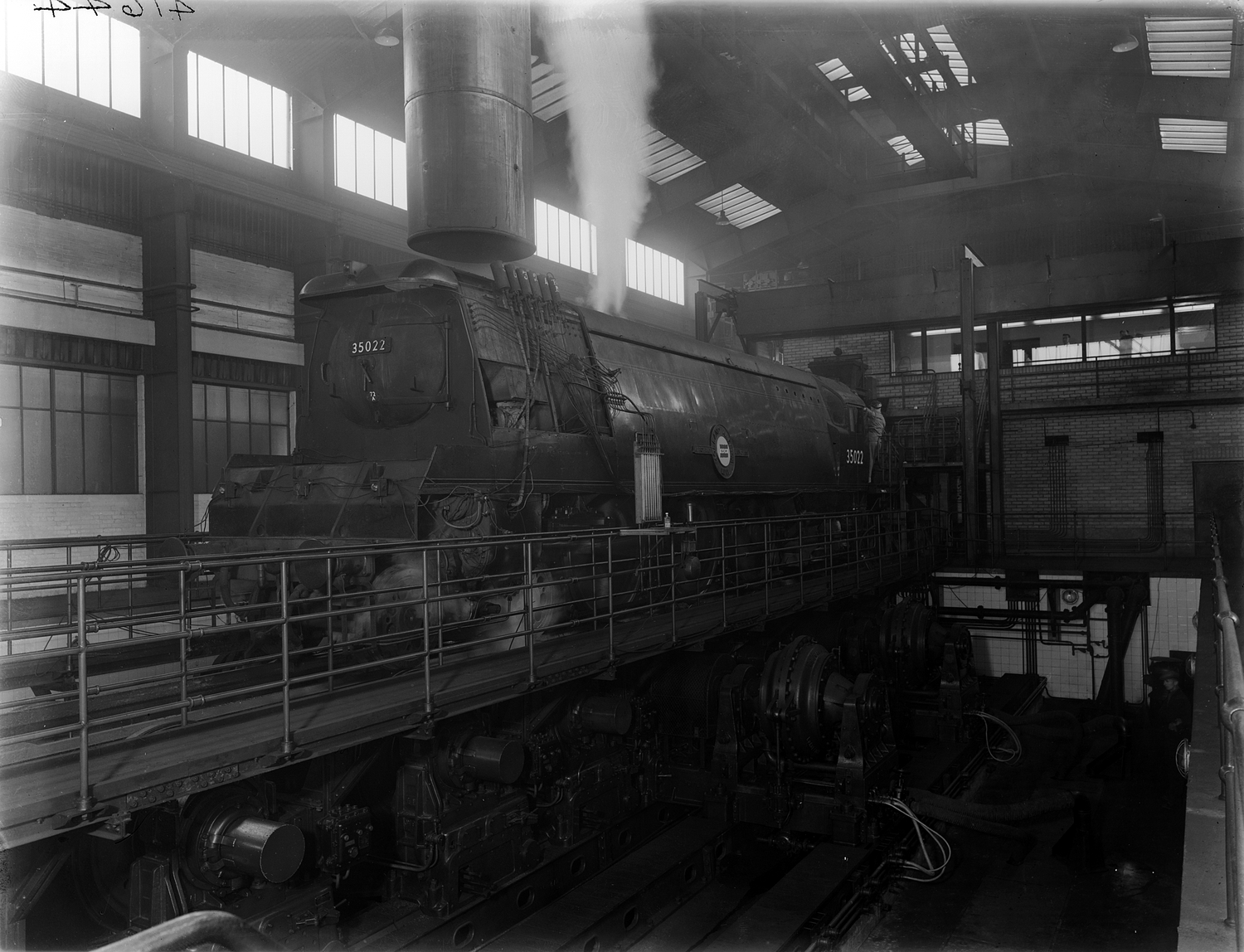
Knighted in 1936, Gresley was President of both the Institution of Mechanical Engineers and the Institution of Locomotive Engineers. He was a keen advocate of testing new designs and concepts in the field, and was vocal in his support for the construction of a locomotive testing plant at Rugby.[18] Gresley would not see this project through, as he sadly died on 5 April 1941, but he has left behind a legacy of innovation and a host of locomotives and rolling stock that still, around a century later, capture the imagination.
Footnotes:
[1] G. Hughes, Sir Nigel Gresley: The Engineer and his Family (Usk: Oakwood Pres, 2001), 19.
[2] T. Hillier-Graves, Gresley and His Locomotives: L&NER Design History (Barnsley: Pen & Sword, 2019), pp. 44-46; S. A. C. Martin, Sir Nigel Gresley: The LNER’s First CME (Bedford: Strathwood, 2023), 15.
[3] Hillier-Graves, Gresley and His Locomotives, 51.
[4] Martin, Sir Nigel Gresley, 25.
[5] “Flexible Twin Carriage, E. C. J.S.”, The Locomotive, Railway Carriage and Wagon Review, 14 Mar. 1908, 57.
[6] “Sir Nigel Gresley”, Railway Magazine 87:528 (June 1941), 241.
[7] Hillier-Graves, Gresley and His Locomotives, pp. 82-87.
[8] Hillier-Graves, Gresley and His Locomotives, pp. 13-33.
[9] Hughes, Sir Nigel Gresley, 84.
[10] Hillier-Graves, Gresley and His Locomotives, 160.
[11] Hillier-Graves, Gresley and His Locomotives, 140.
[12] “Sir Nigel Gresley”, 241.
[13] RCTS, Locomotives of the London & North Eastern Railway Part 2A: Tender Engines – Classes A1 to A10 (Cheltenham: Railway Correspondence and Travel Society, 1973), 92
[14] RCTS, Locomotives of the London & North Eastern Railway Part 2A, 92.
[15] RCTS, Locomotives of the London & North Eastern Railway Part 2A, pp. 125-126.
[16] M. R. Bonavia, The Four Great Railways (Newton Abbot: David & Charles, 1980), 68; Hughes, Sir Nigel Gresley, 191.
[17] T. Hillier-Graves, Gresley’s Master Engineer, Bert Spencer: A Career in Railway Engineering and Design (Barnsley: Pen & Sword, 2023), pp. 173-174.
[18] “Sir Nigel Gresley”, 241.