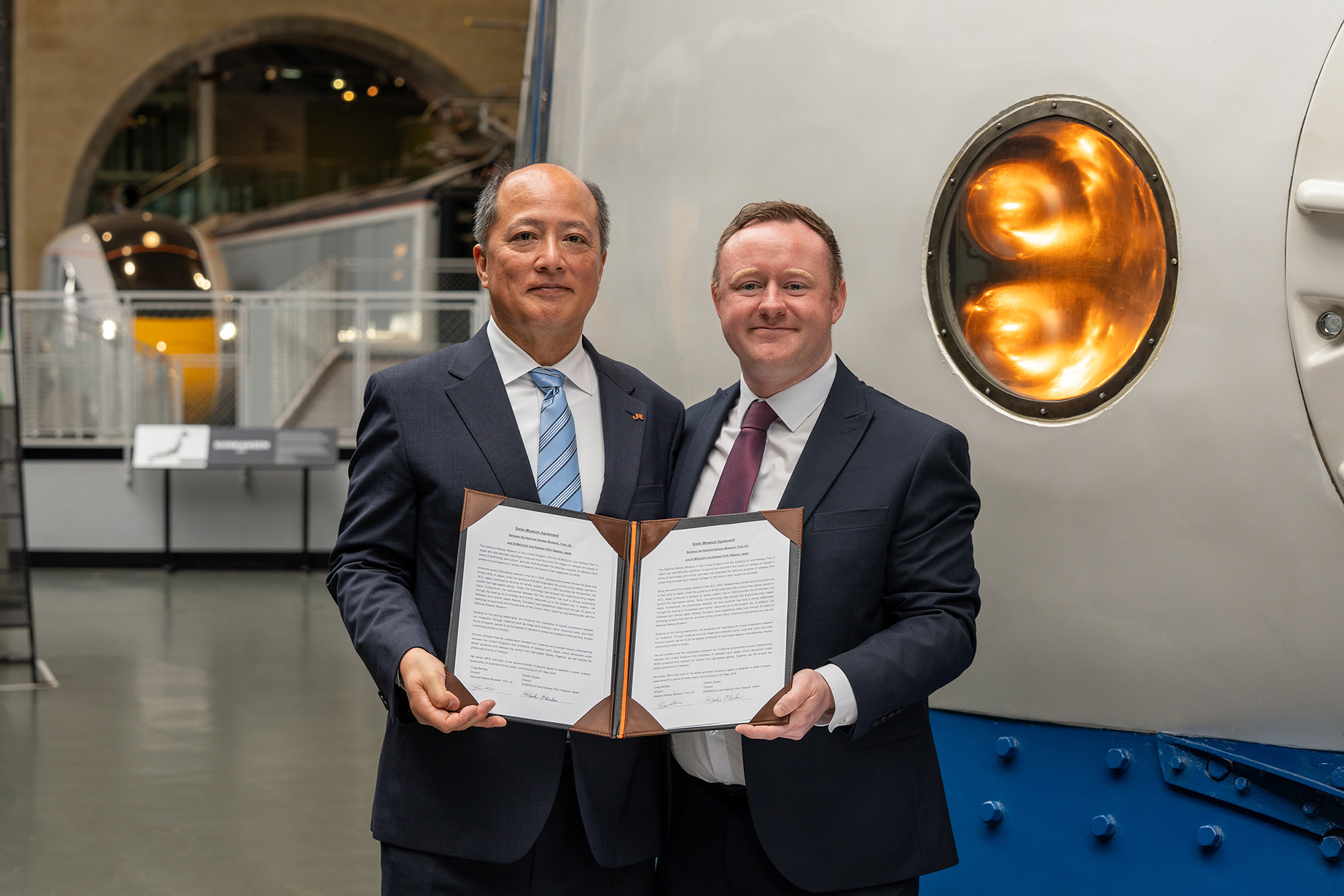
This week, the National Railway Museum was delighted to sign a sister museum agreement with the SCMAGLEV and Railway Park in Nagoya, Japan, owned and operated by Central Japan Railway (JR Central). The partnership further strengthens our ties with Japan’s rail and cultural sectors, building on existing relationships with The Railway Museum in Saitama and Kyoto Railway Museum.
I was fortunate enough to be part of the signing ceremony, which took place—as you may have already guessed—on board one of only two preserved bullet trains outside of Japan, our Shinkansen power car. We were honoured to welcome a number of special guests, including Mr Hitoshi Okabe, Director of the SCMAGLEV and Railway Park, who travelled 6,000 miles to join us.
What makes the SCMAGLEV and Railway Park so exciting is its focus on high-speed rail. Japan is widely recognised as a forward-thinking, technology-led nation, and a key reason for this reputation is its early commitment to high-speed rail at a time when many countries were in favour of expanding road networks and air travel instead.
The world’s first high-speed rail line, the Tōkaidō Shinkansen, opened on 1 October 1964. Travelling at speeds of up to 210km/h (130mph), services linked Tokyo, Nagoya, Kyoto and Osaka, helping to drive enormous economic growth between the cities. For anyone interested in learning more about this remarkable story, I thoroughly recommend Bob’s deep dive into the bullet train on our YouTube channel.
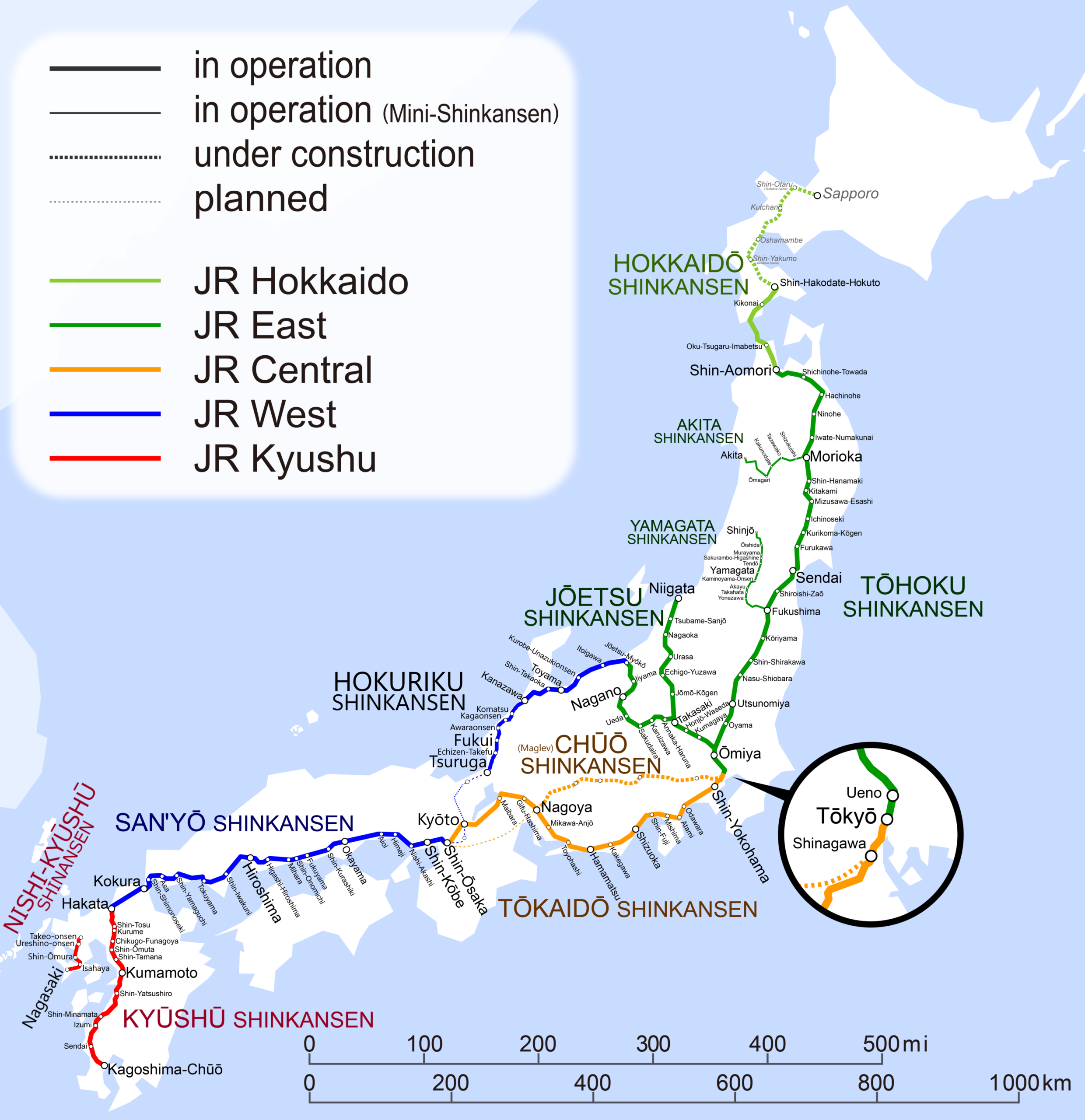

Since then, the Shinkansen network has expanded across almost the entire country. Now, Japan is once again pushing the boundaries of railway technology with superconducting magnetic levitation, or SCMAGLEV.
This is the technology behind the fastest train in the world, the L0 Series, which set an eye-watering speed record of 603km/h (375mph) in 2015.
Carriages are equipped with powerful superconducting electromagnets made from coils of wire cooled to −269°C (−452°F) using liquid helium. In this superconducting state, the coils have zero electrical resistance, allowing very large currents to generate intense magnetic fields. The guideway is also equipped with two types of coils: one for propulsion and another for levitation and guidance. Magnetic forces between the train and the guideway lift, propel, and keep the vehicle stable at incredible speeds.
But why travel at such high speeds?
The museum we are partnering with is based in Nagoya, which will become a major stop on the new Chūō Shinkansen line when it opens, initially connecting the city with Tokyo before later extending to Osaka. Nagoya is 285.6km (177.5 miles) from Tokyo, roughly the same distance as London to York. Today, travelling from London to York takes just under two hours by rail. On the Chūō Shinkansen, that same distance will be covered in only 40 minutes! That is potentially transformational.
When we think about railways being built en masse in nineteenth-century Britain, we often focus on how dramatically they compressed time and distance, reshaping people’s understanding of travel, work and opportunity. In many ways, high-speed rail continues that story today. It takes me around 45 minutes to walk from my house to my local station. The idea that you could travel from Tokyo to Nagoya in the same amount of time is genuinely astonishing.
So what does this partnership mean for our museum?
This agreement marks the beginning of a long-term collaboration between our two organisations. Together, we will share research, stories and best practice in how we engage audiences.
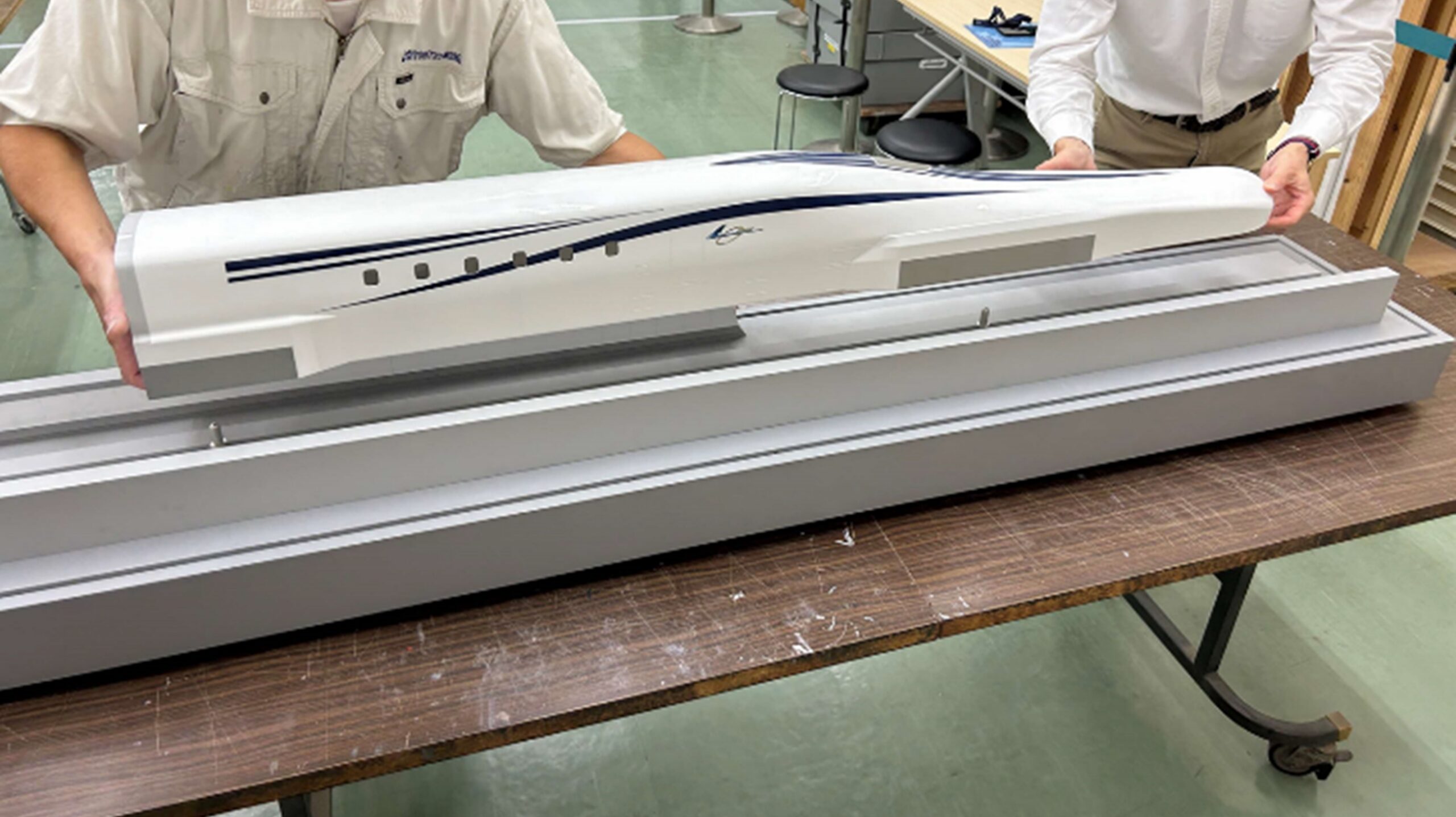
As Lead Curator of Railway Futures: the Porterbrook Gallery, a major new exhibition space under construction at our museum in York, I am delighted to share that we will be displaying a 1:20 scale model of the L0 Series. Manufactured in Japan and kindly loaned to us by Central Japan Railway, the model will help visitors explore the engineering behind the world’s fastest train while also encouraging discussion about the future of transport. What role should maglev technology play in the decades ahead? How might high-speed rail reshape the way we travel and connect our cities?
Our role as a museum isn’t to tell people what the future will look like. Instead, we will use objects like this to encourage visitors to imagine different futures and consider what it is that they really want to see.
There is, of course, a long and fascinating history of collaboration between the British and Japanese railway industries. Japan’s first locomotive, the JGR Class 150, was built in Newton-le-Willows. Kaichi Watanabe, one of the first Japanese engineers to study in Britain, contributed to the development of the Forth Bridge in the 1880s. Hideo Shima, Chief Engineer of the Shinkansen project, visited the Railway Technical Centre in Derby in 1963. More recently, Adrian Shooter, a hugely influential figure in Britain’s privatised railway industry, established the UK–Japan Railways Exchange Programme, which continues today.
Our new partnership with the SCMAGLEV and Railway Park is the latest chapter in this remarkable shared history. I can’t wait to see what we achieve together.