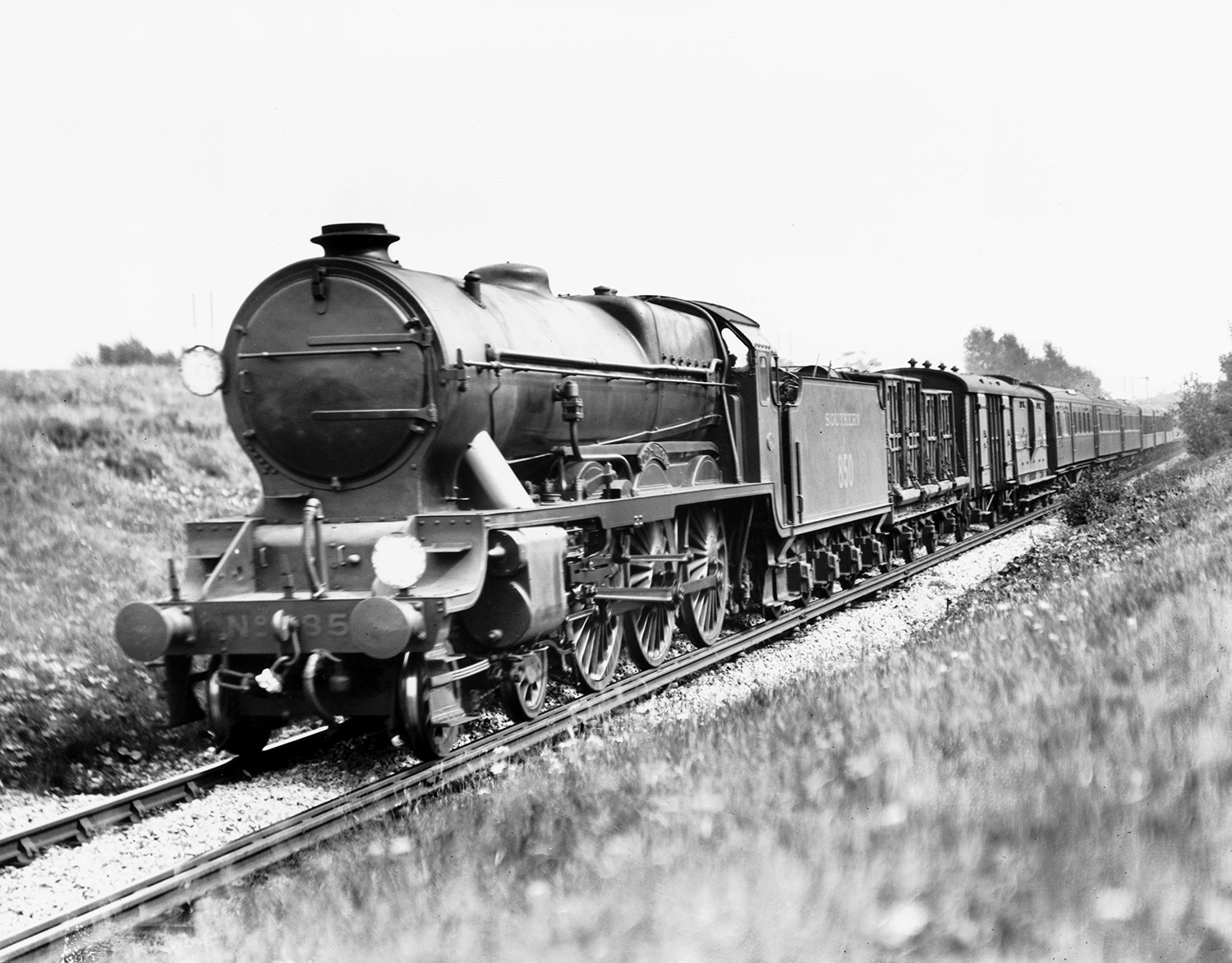
The context for the design was that Richard Maunsell, Chief Mechanical Engineer of the Southern Railway faced a formidable engineering challenge. The Traffic Manager wished to run Continental boat trains of up to 500 tons at a sustained 55mph.[1] The problem was that alongside the need to operate on any Southern main line, many of the routes from London Victoria to Dover and Folkestone were weight restricted.[2] The Southern’s existing locomotive stock had reached their operating capacity, and so a new design was needed. The concept would take inspiration from locomotives already in operation and technical research.
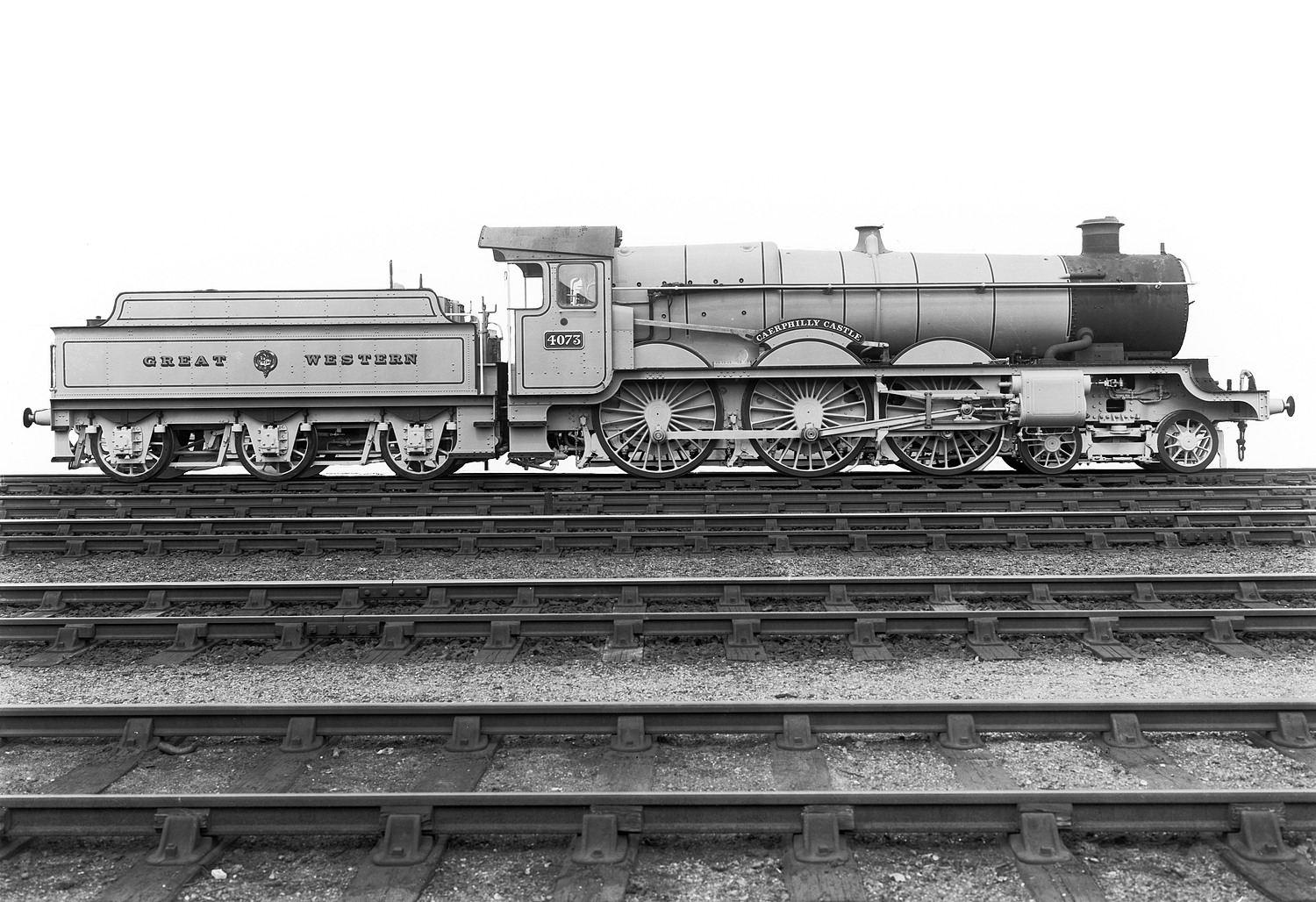
Having negotiated a slight weight increase from the Southern’s Civil Engineer, Maunsell’s design team set to work. James Clayton, Maunsell’s assistant, had arranged a ride on one of the Great Western Railway’s (GWR) ‘Castle’ Class 4-6-0s, and reported back favourably.[3] The new locomotive would be a 4-cylinder 4-6-0, with drive divided between the front and middle driving wheels, themselves 6 foot 7 inch (2m) in diameter. This helped to minimise ‘hammer blow’ forces transferred from the locomotive to the track, but unusually, the cranks were set at 135 instead of 90 degrees. The result was a locomotive producing eight, rather than four exhaust beats per revolution of the driving wheels, which research and testing had shown to improve torque and evened out the draught on the fire.[4] The firebox design followed GWR practice by being of long, narrow Belpaire-type with a grate composed of a level section at the rear and a sloping section towards the front to clear the rear driving wheel.[5]
The completion of drawings in March 1925 brought a change of heart from the Civil Engineer, who requested that the new locomotive be made even lighter.[6] This was achieved by using high-tensile steel motion components, by machining excess metal from castings and using thinner plate fames.[7] The large, superheated boiler design, which boasted an operating pressure of 220lb/psi (1.52MPa), was slightly reduced in length and tapered to reduce water capacity—and hence weight—at the cooler front end.[8]
The prototype emerged from Eastleigh as No. E850 Lord Nelson on 12 August 1926. It was named after Vice-Admiral Horatio Nelson, a leading Royal Navy commander during the French Revolutionary and Napoleonic Wars, the Southern Railway seeing an opportunity to promote its maritime links. The Southern also lost no time in advertising the fact that with a nominal tractive effort—the pulling force of a locomotive—of 33,500lb (149.06kN), it was the most powerful in Britain at the time of construction.[9] The locomotive underwent trials, its inaugural passenger run being at the head of the Atlantic Coast Express. A production batch of ten was ordered in 1927, and a further ten were ordered in 1928. This batch was reduced to five in response to the economic depression that occurred in 1929.[10] A total of 16 locomotives therefore formed the ‘Lord Nelson’ Class, all named after British seafaring personalities ranging from Sir Walter Raleigh to Robert Blake.
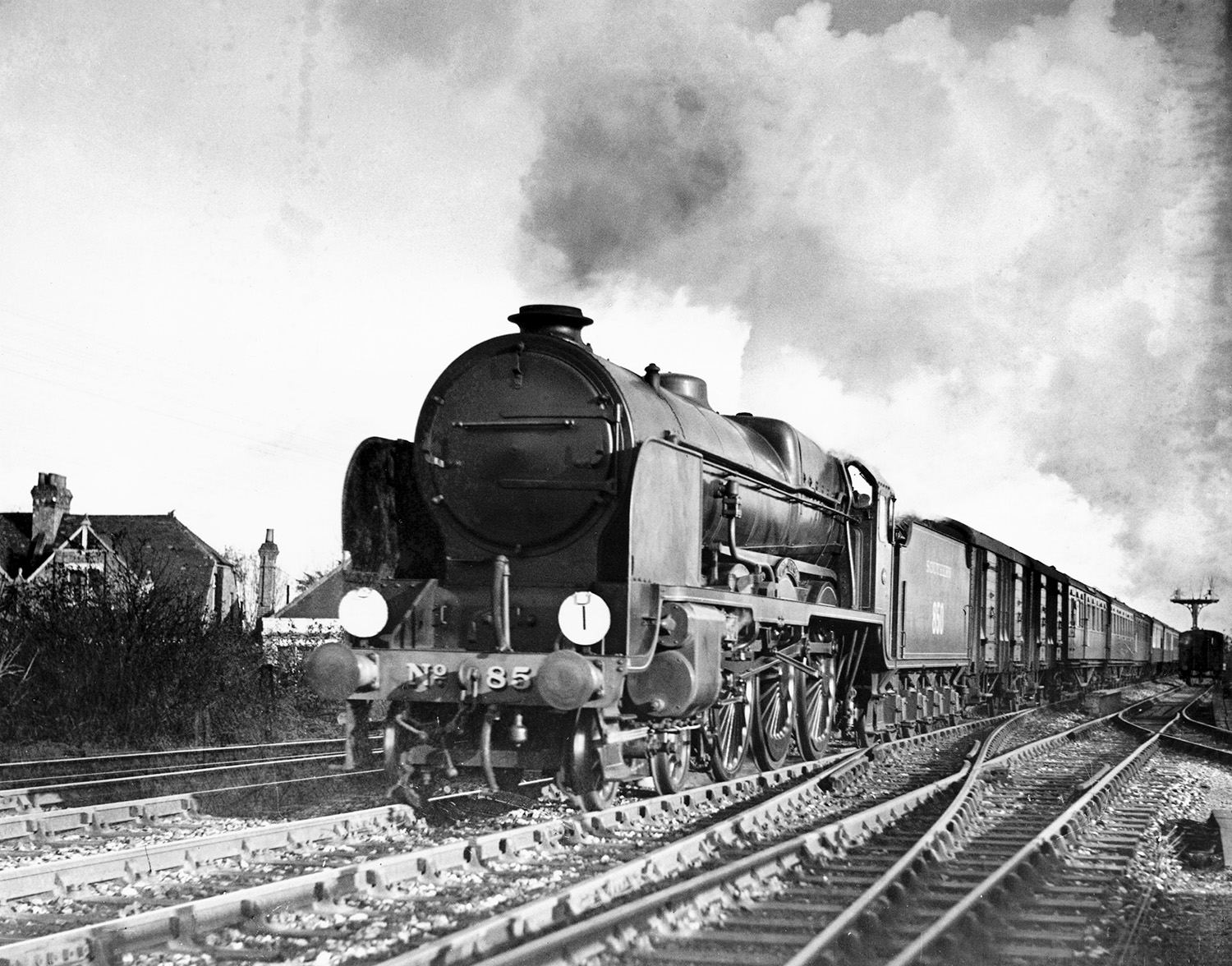
In service, the class proved capable of meeting the design brief but nevertheless possessed an Achilles’ Heel.[11] The unusual, for the Southern, long firebox reportedly required a different firing technique to that of existing express passenger types, which meant that they could prove poor steamers in the hands of inexperienced crews.[12] The fact that they were not widespread across the network exacerbated this issue. Nevertheless, the design’s place in British railway history is perhaps best illustrated by its influence on what came after it.
In achieving increased power without the penalty of excessive weight, Lord Nelson had captured the attention of other British railway companies. Indeed, the loss of prestige spurred the GWR into developing its 60xx ‘King’ Class 4-6-0, which, with 40,300lb/psi (179.3kN) tractive effort, easily regained the ‘Britain’s most powerful steam locomotive’ title upon entry into service in 1927.[13] Furthermore, the London, Midland and Scottish Railway (LMS), struggling to provide locomotives capable of meeting the demands of its long-distance expresses, had trialled GWR ‘Castle’ Class No. 5000 Launceston Castle on its Euston-Carlisle services in 1926. The result was a desire within LMS management to build a powerful fleet of 4-6-0s, but a request for ‘Castle’ drawings to aid design was turned down.[14] The LMS found a more willing collaborator in Maunsell, who allowed ‘Lord Nelson’ drawings to be loaned to the company, although beyond similarities in firebox design, their influence upon the 3-cylinder ‘Royal Scot’ Class 4-6-0 of 1927 remains unclear.[15]
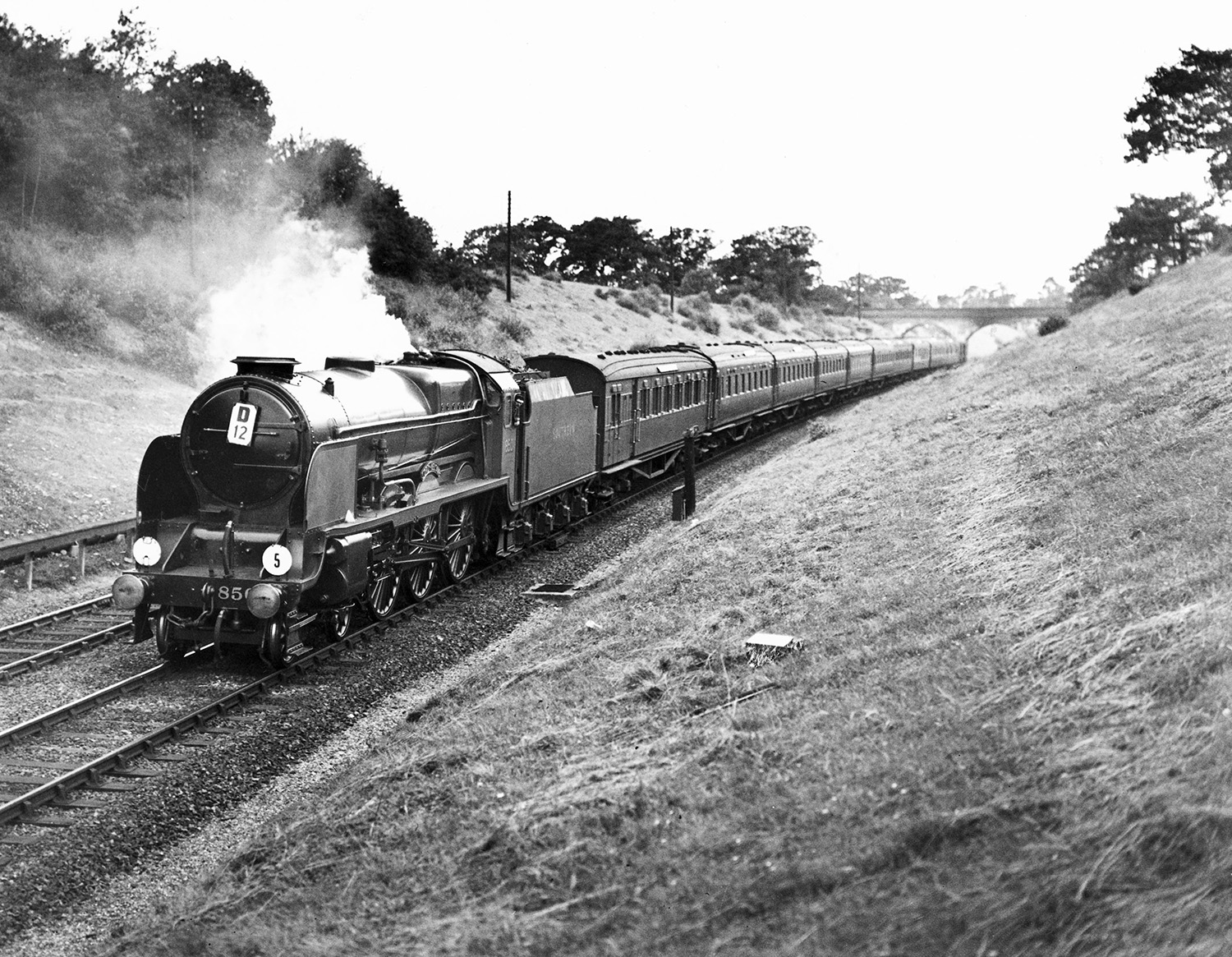
The class received modifications—one locomotive, No. E859 Lord Hood, received 6ft 3in (1.9m) driving wheels for little apparent benefit. The most noticeable was the addition of smoke deflectors to prevent drifting smoke obscuring the view forward from the cab.[16] The class was also fitted with Lemaître multiple jet blastpipes from 1938 by Maunsell’s successor, Oliver Bulleid. Although practical, this did little for aesthetics as the new blastpipe was accompanied by a wide-diameter chimney.[17] After the war, rising prevalence of Bulleid’s Pacific locomotives saw the ‘Lord Nelson’ Class gradually relegated to lesser passenger duties. Passing into British Railways ownership in 1948, all 16 of the class were eventually concentrated at Eastleigh shed. Withdrawal commenced in 1961, and the last was taken out of service in 1962.
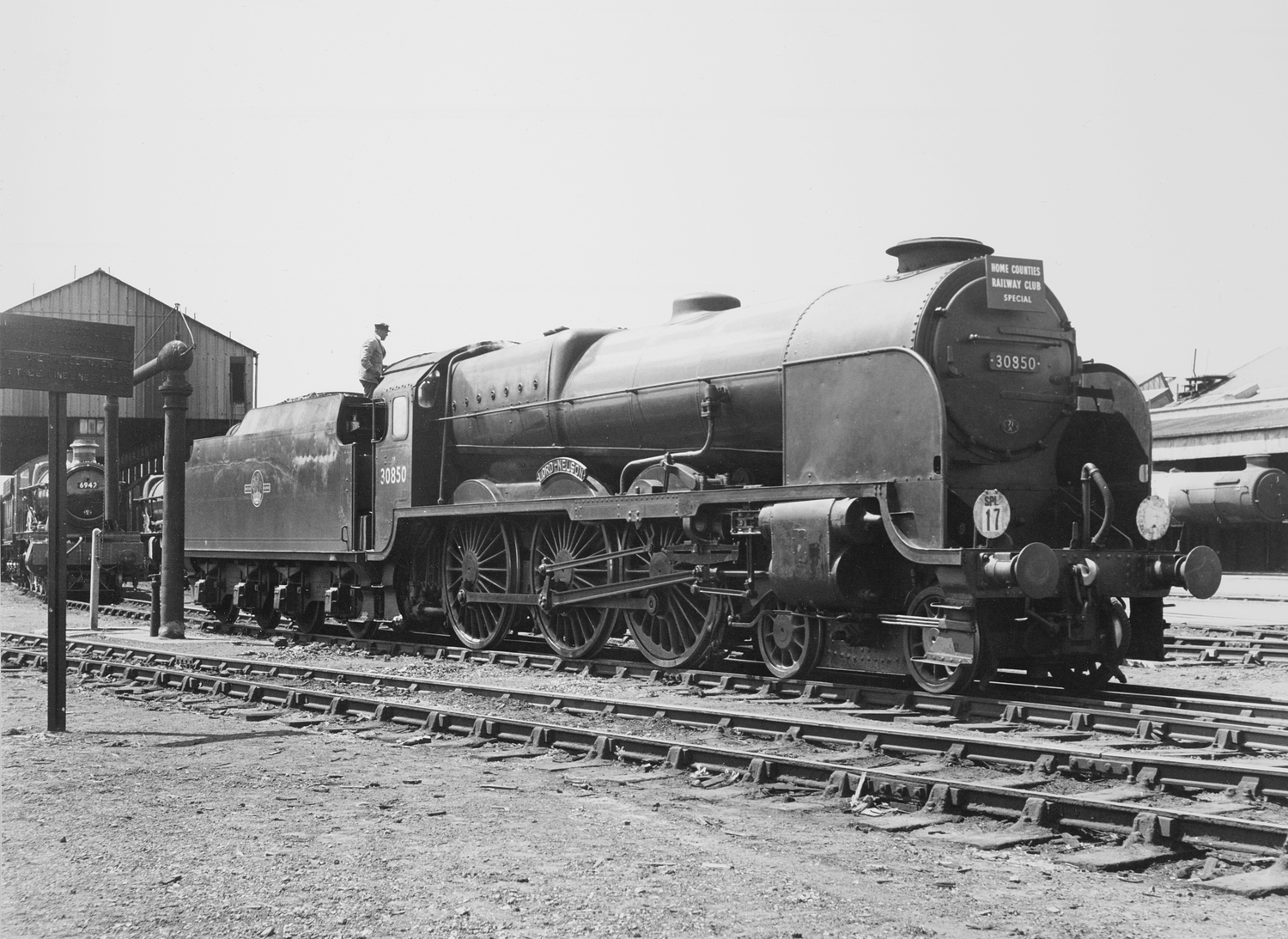
Since preservation, Lord Nelson has steamed on both the national network and on heritage railways. In recent years, it has been in the care of the Mid-Hants Railway as it awaits its turn for overhaul. It is fitting to mark the centenary of a remarkable locomotive design that Eastleigh Shedmaster S. C. Townroe noted secured ‘…a significant increase in power of a 4-6-0 type with a minimal increase in weight’ and sparked a race for power and prestige in the process.[18]
Footnotes:
[1] “New Four-Cylinder 4-6-0 Locomotive, Southern Railway”, The Railway Engineer (1926), 397.
[2] D. L. Bradley, Locomotives of the Southern Railway, Part 1 (London: RCTS, 1975), 2.
[3] D. Maidment and B. Meanley, Great Western Castle Class 4-6-0 Locomotives, 1923-1959 (Barnsley: Pen & Sword, 2022), 66.
[4] “New Four-Cylinder 4-6-0 Locomotive, Southern Railway”, 395; Bradley, Locomotives of the Southern Railway, Part 1, 4.
[5] “New Four-Cylinder 4-6-0 Locomotive, Southern Railway”, 395; Bradley, Locomotives of the Southern Railway, Part 1, 4.
[6] Bradley, Locomotives of the Southern Railway, Part 1, 3.
[7] Bradley, Locomotives of the Southern Railway, Part 1, 3.
[8] Bradley, Locomotives of the Southern Railway, Part 1, 3.
[9] “New Four-Cylinder 4-6-0 Locomotive, Southern Railway”, 395; Bradley, Locomotives of the Southern Railway, Part 1, 4.
[10] Bradley, Locomotives of the Southern Railway, Part 1, 6.
[11] T. Hillier-Graves, The Lord Nelson Class 4-6-0s (Barnsley: Pen & Sword, 2020), 58.
[12] Bradley, Locomotives of the Southern Railway, Part 1, 9; R. Derry, The Book of the Lord Nelson 4-6-0s (Clophill: Irwell Press, 2005), 14.
[13] D. Maidment, Great Western King Class 4-6-0s: From Construction to Withdrawal (Barnsley, Pen & Sword, 2020), 11.
[14] A. F. Cook, LMS Locomotive Design and Construction: Locomotive Engineers, Their Designs and Modifications (Lincoln: RCTS, 1990), pp. 39-40.
[15] Cook, LMS Locomotive Design and Construction, 40.
[16] Bradley, Locomotives of the Southern Railway, Part 1, pp. 6-7.
[17] Bradley, Locomotives of the Southern Railway, Part 1, 15; R. Derry, The Book of the Lord Nelson 4-6-0s (Irwell Press, 2005), 14.
[18] S. C. Townroe, quoted in Derry, The Book of the Lord Nelson 4-6-0s, 2.